The Paradox of Artificial Intelligence: Progress or Crisis?
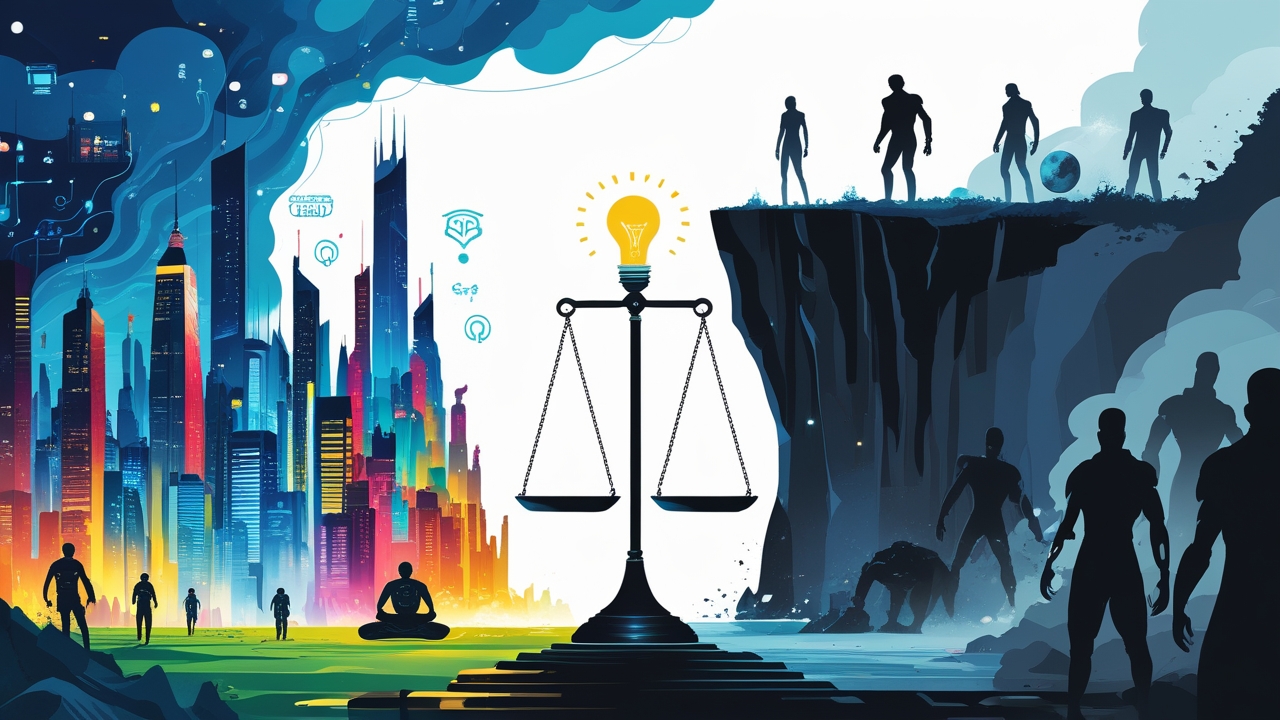
The Paradox of Artificial Intelligence: Progress or Crisis?
In a world where artificial intelligence (AI) is advancing by leaps and bounds, it is natural to wonder: are we facing a bright future or an impending crisis? In this article, we will explore the possible economic and social consequences of AI, focusing on the hypothetical scenario of a global crisis in 2028. As AI becomes an integral part of our daily and working lives, it is crucial to understand its implications and how we can effectively manage change.
“Artificial intelligence is not the end; it is the tool that will lead us to a new beginning.”
Imagine waking up one day and finding yourself in a world where everything has become more efficient, where the tasks you used to do have been replaced by machines that work non-stop. At first, the idea sounds wonderful: more time to enjoy life, fewer hours of work, and, of course, unprecedented productivity. But what happens when reality starts peeking out from behind that curtain of prosperity?
The concern lies in the fact that this massive automation could lead to chain layoffs, where millions of workers are pushed to seek new opportunities in a labor market that no longer needs them. The impact would not reverse in terms of increased consumption: a disturbing paradox arises where, despite having advanced technology, economic well-being could be threatened.
When we think of artificial intelligence, we often fill with admiration for its capabilities, but it is essential to ask ourselves: are we building a future that works for everyone? Or are we allowing technology to dictate our economic destiny? Here is where reflection becomes crucial. The uncontrolled adoption of AI can be a double-edged sword, and it is our responsibility to find a balance between innovation and stability.
Thus, the question arises: how can we adapt to these changes? It would be a mistake to assume that we are doomed to what analysts warn. This is where history becomes more interesting. Instead of seeing AI as an enemy that threatens our resilience, can we adopt a collaborative approach? The idea of learning and evolving becomes the central axis of our survival capacity.
Developing new skills and competencies is essential. Rather than fearing AI, a perfect synergy can be promoted, where humans and machines collaborate. Here, AI is not a simple substitute, but an ally that boosts our capabilities and creativity. Precisely, this is the change we must embrace.
As individuals, we face a challenge that, although overwhelming, can be seen as an opportunity. The need for education and reinvention becomes more pertinent. We find ourselves at a crucial moment where each of us has the responsibility to take an active role in our own adaptation. Thinking about how we can leverage AI tools to improve our work and personal lives is a bet worth taking.
We have only scratched the surface of a sea of possibilities. A positive outlook implies that through continuous learning and adaptation, we can not only survive but thrive. The conscious incorporation of technology into our lives could transform into a catalyst for improving our quality of life. So, are you willing to take this step?
Finally, it is imperative to prepare for a future where AI will play a central role. Reflect on this: it is not just about technology, but how it interacts with our lives and with others. By investing in our education and skills, fostering that collaboration between humans and machines, we open the door to unlimited opportunities. We are at a moment of radical change, and it is our decision how to face it. The important thing is not to lose humanity amid technological advancement.
Book some metoring time with Tuyo Isaza: Book your discovery session. inteligencia artificial, crisis económica, automatización, adaptación, productividad, mercado laboral, colaboración, cambio social
Please visit for more articles: www.tuyoisaza.com
artificial intelligence


Comentarios