The Power of Social Computing: Transforming Lives Through Technology
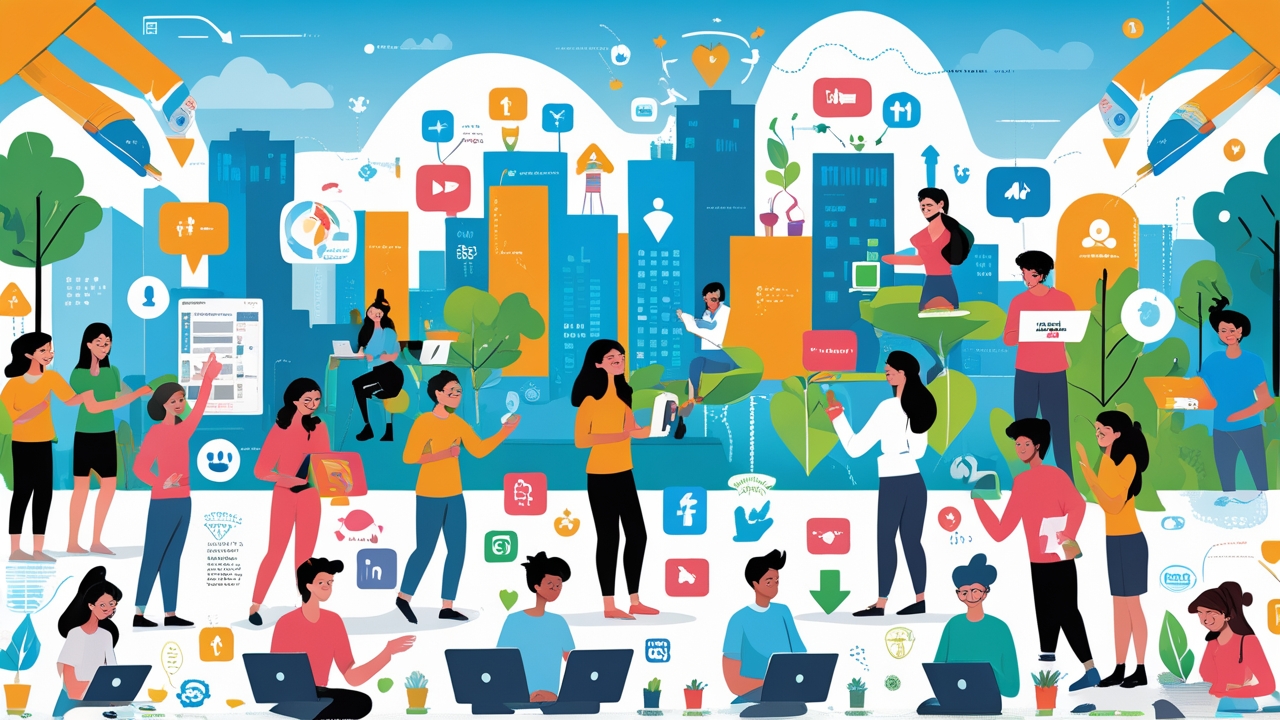
The Power of Social Computing: Transforming Lives Through Technology
Discover the impact of social networks in the field of computing and social trust
Imagine a moment when you find a genuine connection with someone through a simple online interaction. That relationship becomes a bridge to opportunities, learning, and personal growth. Welcome to the fascinating world of social computing, where technology and human trust intertwine to create new realities.
Throughout my years of research in this field, I have seen firsthand how digital connections can transform not only the way we interact, but also how we perceive the world around us. From initial difficulties in getting the validation of these interactions accepted, to a current landscape where social computing becomes a central axis of innovation and human development.
A Persuasive Journey
I remember a day when I was discussing with a friend about the power of social networks. He was skeptical; he doubted their ability to generate meaningful change. So, I decided to invite him to a talk about social computing that I was organizing. At the end of the presentation, his face reflected a mix of astonishment and reflection. “I never thought something so virtual could have such a real impact on our lives,” he told me.
This experience made me realize that there is intrinsic value in understanding how social dynamics work on digital platforms. At that moment, I was not just sharing information; I was opening doors to new ways of understanding our interactions as human beings.
Understanding Social Computing
Social computing is not just a trendy phenomenon in the tech field, but a fundamental aspect that is reconfiguring our interactions and relationships. Social networks have evolved far beyond being a space to share photos or fleeting thoughts. They have become a meeting place where bonds are strengthened and ideas are shared exponentially.
Research in this field has grown and diversified, addressing topics ranging from trust building to social influence analysis. Today, algorithms developed to study these interactions are powerful tools that can help us predict outcomes and better understand human behavior.
An Integrative Approach
The book Computational Intelligence in Biomedical Engineering is an invaluable resource that addresses the intersection of computational intelligence and biomedical engineering. Although it seems distant from the topic of social computing, the background is remarkably similar: the ability of machines to learn and adapt to patterns that may be invisible to the human eye.
Here we can see a direct analogy: just as computational intelligence is applied to improve diagnoses and treatments in health, social computing, with its ability to analyze networks and relationships, can help us solve complex social problems. In both cases, the key lies in using technological tools to transform realities.
Challenges and Opportunities
However, there are challenges that we must face on this journey. From a social perspective, it is critical to ensure that technology has equitable reach. We must be attentive to how the adoption of these tools can either enhance or reduce existing inequalities. Everyone deserves the same access to the opportunities that these technologies can offer.
There are also ethical dilemmas that arise when we automate decisions. Responsibility and human autonomy must remain at the forefront of our priorities. It is not just about trusting a system; it is about trusting our ability to interact with that system critically and consciously.
A Look Towards the Future
As researchers and as individuals, we need to position ourselves as catalysts for change. The integration of computational intelligence into various disciplines not only offers innovative solutions but also empowers us as active digital citizens. At the end of the day, the tools we choose to use can define our future.
So my invitation to you is simple: embrace change. If you are interested in social computing, explore! Contribute to this conversation. Study these behavior patterns. Question and learn. Every hand raised in the digital world can be the spark that ignites real transformation.
Reflecting Together
To conclude, return to that image from the beginning: the human connection in a digital space. How can you make that connection not only possible but transformative? From my experience, I can affirm that we must be more intentional and proactive in our interactions, seeking not just the yes and the like, but a real engagement that fosters growth both inside and out.
Social computing is that fertile field where our concerns can blossom into solutions. I encourage you to join in the exploration. Every step forward in this area is a step toward a future where technology and humanity can coexist in harmony.
Book some metoring time with Tuyo Isaza: Book your discovery session. computación social, redes sociales, inteligencia computacional, transformación digital, oportunidades, ética, cambio social, comunicación, tecnología y humanidad
Please visit for more articles: www.tuyoisaza.com
social computing


Comentarios