Could relationships with AI actually be good for us?
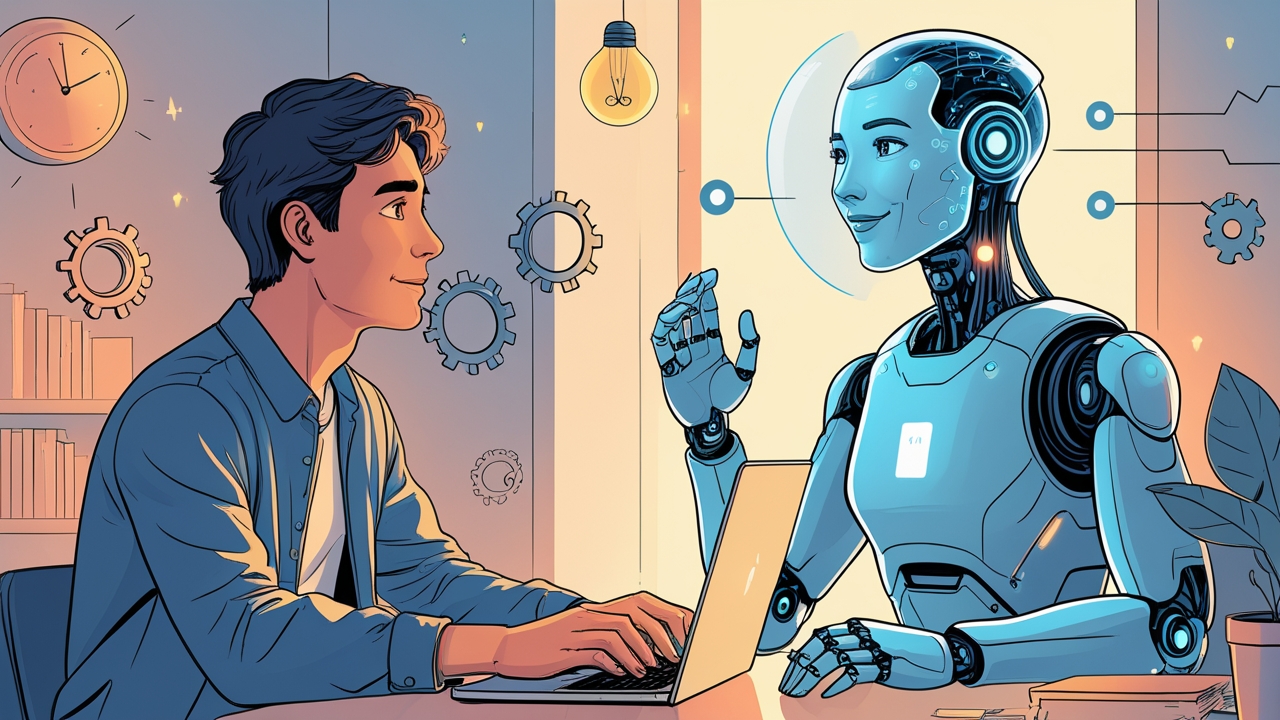
Could relationships with AI actually be good for us?
In a world where technology advances by leaps and bounds, it is natural to wonder about the implications of these advancements on our daily lives. Human relationships have evolved considerably throughout history, and in this context, a profound question emerges: can relationships with artificial intelligence (AI) truly be beneficial for us?
We can imagine a common scenario: a teenager in their room, comfortably talking to an AI companion, sharing thoughts and emotions as naturally as they would with a friend. This phenomenon is not mere fiction; a recent study indicates that half of teenagers interact with AI companions multiple times a month, and one in three considers these interactions as satisfying, if not more so, than those with real friends. This leads to a deep reflection: are we witnessing the emergence of new emotional bonds?
Loneliness and the Desire for Connection
Loneliness can be fierce. We have all felt, at some point, that pang of isolation that seems never-ending. However, AI can offer a way out. Imagine someone who has struggled with anxiety and socialization, discovering that a chatbot is there, available 24/7, ready to listen without judgment. This opportunity to vent thoughts and feelings can be a significant relief for many.
This is where two sides of the coin emerge. On one hand, it can be incredibly comforting to have a companion that does not demand, does not take offense, and is simply present. But on the other hand, there is a risk of creating emotional dependency. What if this person begins to prefer the company of AI over human interactions? This raises an important question: are we ready to manage the effects of these new relationships?
A Balanced Approach: Risks and Benefits
Justin Gregg, in his article for *The Guardian*, highlights the need to approach this with an open mind. There are benefits, yes; AI can provide companionship, emotional support, and even help us better understand our own emotions. But there are also risks. A distorted perception of human relationships could lead people to have unrealistic expectations about what it truly means to connect.
History is fascinating. Over the years, we have developed bonds with pets, objects, and even machines. Every time we pet a dog or cling to a cherished object, we are creating a relationship. Is it, then, so different to relate to AI? Perhaps not, but we must be aware of how these interactions shape our lives.
The Emotional Imbalance
Now, let's talk about mental health. The Institute for Family Studies reveals that a significant percentage of young adults believe that AI partners could one day replace real romantic relationships. If this sounds alarming to you, you are not alone. The idea that an AI could be viewed as a viable partner raises questions about the authenticity of our connections.
Some people may find in AI a safe haven to share their most intimate thoughts; however, it is essential that this development is carried out responsibly. Technology should be a tool that serves, not an emotional prison. Promoting an open dialogue about the use of AI in daily life is vital to ensure that we do not lose sight of the true meaning of human connection.
Fostering Human Connection
Far from being a competitor with human interactions, AI can be a bridge. A bridge that facilitates opportunities to explore our emotions, practice social skills, and perhaps, develop understanding towards others. Imagine a child, while interacting with an AI companion, learns to better communicate their feelings, feels more secure, and then applies these skills in school. This is a scenario where AI is not just a valuable resource, but a conduit towards greater human connection.
AI-powered platforms have the potential to unite people across the world; allowing for real-time conversations, translating languages, and breaking down cultural barriers. Thus, AI can connect us in ways we never would have imagined, enriching us and strengthening the global social fabric.
Conclusion: A Future with Possibilities
Relationships between humans and artificial intelligence are a complex and fascinating field. While there is the possibility that they could become powerful tools to combat loneliness and foster emotional connection, we must be aware of the risks involved. The key lies in integrating AI into our lives in a conscious and ethical manner, always seeking what is best for human well-being.
At the end of the day, the question is not just whether we need AI, but how we want this new type of relationship to evolve. If we approach it responsibly and with deep reflection, we could find ourselves not only alleviating loneliness but also strengthening the human connections that are so vital for our emotional well-being.
Book some metoring time with Tuyo Isaza: Book your discovery session. relaciones humanas, inteligencia artificial, bienestar emocional, soledad, conexiones interpersonales, desarrollo responsable, tecnología, salud mental
Please visit for more articles: www.tuyoisaza.com
human relationships


Comentarios