Colombia 2026: A Minimum Wage that Seeks to Transform Lives
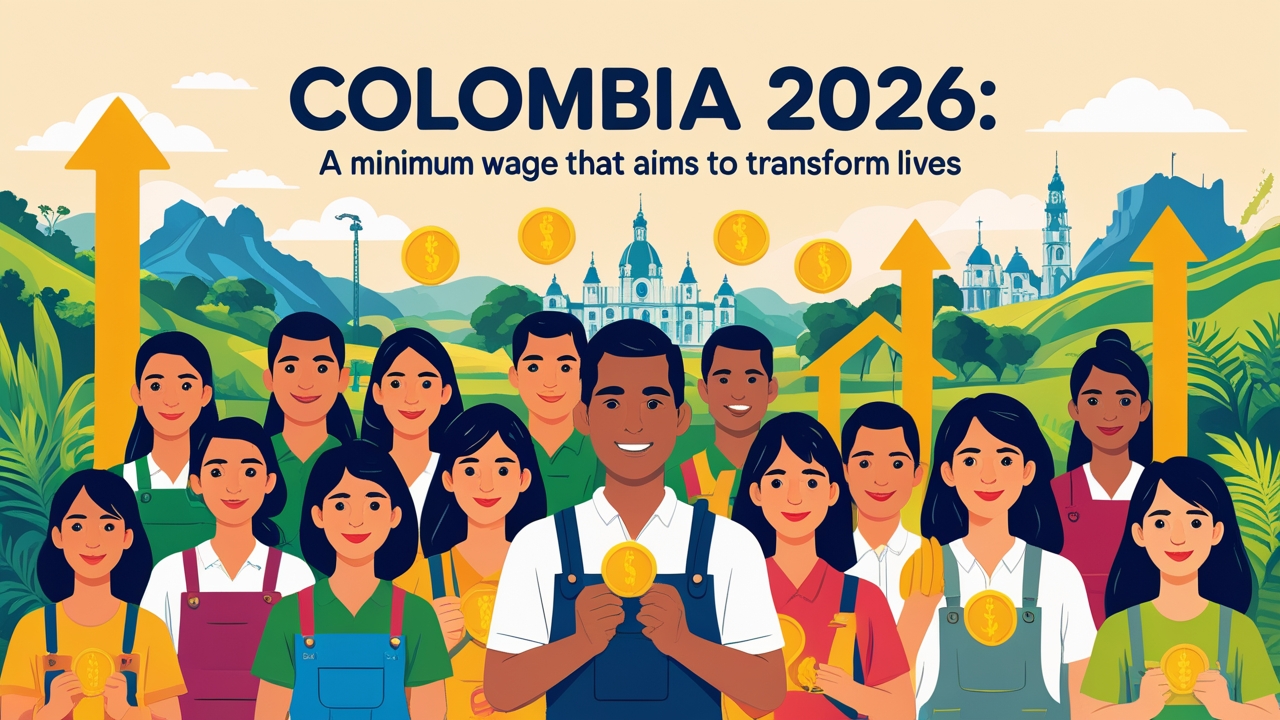
Colombia 2026: A Minimum Wage that Seeks to Transform Lives
If you've ever wondered how a change in economic policy can profoundly impact the lives of millions, the case of the minimum wage increase in Colombia for 2026 serves as a clear example. This 22.7% increase, the most significant in decades, invites us to reflect on the meaning of work, dignity, and social welfare.
“The true measure of your wealth is how much you'd be worth if you lost all your money.” - Anonymous
Imagine one ordinary morning, when you wake up knowing that the previous day’s efforts barely covered basic needs; that economic insecurity that can tighten your chest, limiting dreams and aspirations. For many Colombians, this has been the reality. Yet, hope persists, a hope that has been fueled by the recent announcement from President Gustavo Petro.
In a meeting where they gathered to discuss the minimum wage increase, representatives from various sectors engaged in tense dialogue, filled with tensions and expectations. However, the lack of consensus led the executive to announce the increase by decree. The resulting figure, 1.75 million pesos, symbolizes not only a monetary change but a push towards equity and social welfare.
To summarize the essence of this increase is akin to making a small yet powerful adjustment in a gear; from having an economic area that had been stuck for years, it was finally decided to set it in motion. This is an experience we have witnessed repeatedly in the labor cycle of Colombians, where the minimum wage is not just a simple number. It is the guarantee of being able to bring home more than mere survival.
The Debate in the Economic Arena
But what happens when we enter the arena where we are exposing ideas and desires? On the Government's side, the message is clear: a higher minimum wage not only improves workers' living conditions but also creates a multiplier effect in the economy. Optimistic voices suggest that by increasing citizens' purchasing power, domestic consumption will be stimulated, which, in turn, could open up new opportunities for employment and growth.
However, on the other end, the business sector whispers warnings. It is easy to understand their fears: the drastic increase could translate into added pressure for small and medium-sized enterprises, those that are in a constant struggle to remain competitive. With this abrupt increase, the risk of layoffs or a decrease in new hiring becomes a tangible concern. How then to find a balance between labor dignity and business viability?
Voices Fighting for Social Justice
On the other hand, unions, representing workers who for years felt that the minimum wage was insufficient even to start a dialogue about their basic needs, welcome the increase as a historic victory. They celebrate a milestone that is more than numbers on a page; it is a promise of dignity. Here the narrative changes: it is not about being the voice of fear or uncertainty, but positioning the perspective that a higher wage opens the doors to real growth for the national economy.
Imagine that every step a worker takes on their daily commute to work is done with the certainty that their effort will be adequately rewarded. That can change the face of a country.
Reflections on the Future
However, it is essential to approach this increase from a broader vision. Some economists, such as those from Fedesarrollo and ANIF, delve into their theoretical analyses, reminding everyone involved that the economy and inflation are not games of chance. A significant increase over levels of productivity and inflation can lead to unexpected outcomes. This economic tsunami could be felt in the years to come, affecting not only employment but the stability that Colombians have worked so hard to build.
Thus, the dilemma extends: to what extent is the country willing to invest in immediate welfare against the risk of long-term economic sustainability? These are questions that must be answered with equity and a Christian vision towards the future.
A Maze of Decisions
The situation facing Colombia goes beyond the dispute between workers and employers, venturing into a maze of decisions. On one hand, the Government and unions highlight the need to act in response to the urgency of the social reality, where millions cannot wait any longer. On the other hand, business owners and economic analysts striving for system stability warn that an unstable climate could create adverse effects for years.
Ultimately, the increase in the minimum wage for 2026 marks a new chapter in the country's economic history. The success of this measure will depend on multiple factors, from the State's ability to implement support policies for small businesses to controlling inflation and generating formal employment. It must not be forgotten that this is a social and economic experiment that tests the viability of a development model centered on the dignity of workers.
Closing the Circle of Reflection
So, at the end of the day, we can ask ourselves: what kind of society do we want to build? One that prioritizes profitability over dignity, or one that strives to ensure that every Colombian has the backing of a fair wage? Closing this circle of reflection should not, and cannot, be an isolated exercise. Rather, it needs to be a constant dialogue among all actors in our country's economic and social life. The path is not easy, we know, but each step forward can, over time, change not only individual lives but the very essence of our nation.
And you, what path are you willing to take? The decision is in our hands.
Book some metoring time with Tuyo Isaza: Book your discovery session. salario mínimo, Colombia, Gustavo Petro, justicia social, economía, dignidad laboral, empleo
Please visit for more articles: www.tuyoisaza.com
minimum wage


Comentarios