Honesty in Artificial Intelligence: Learning to Acknowledge Our Mistakes
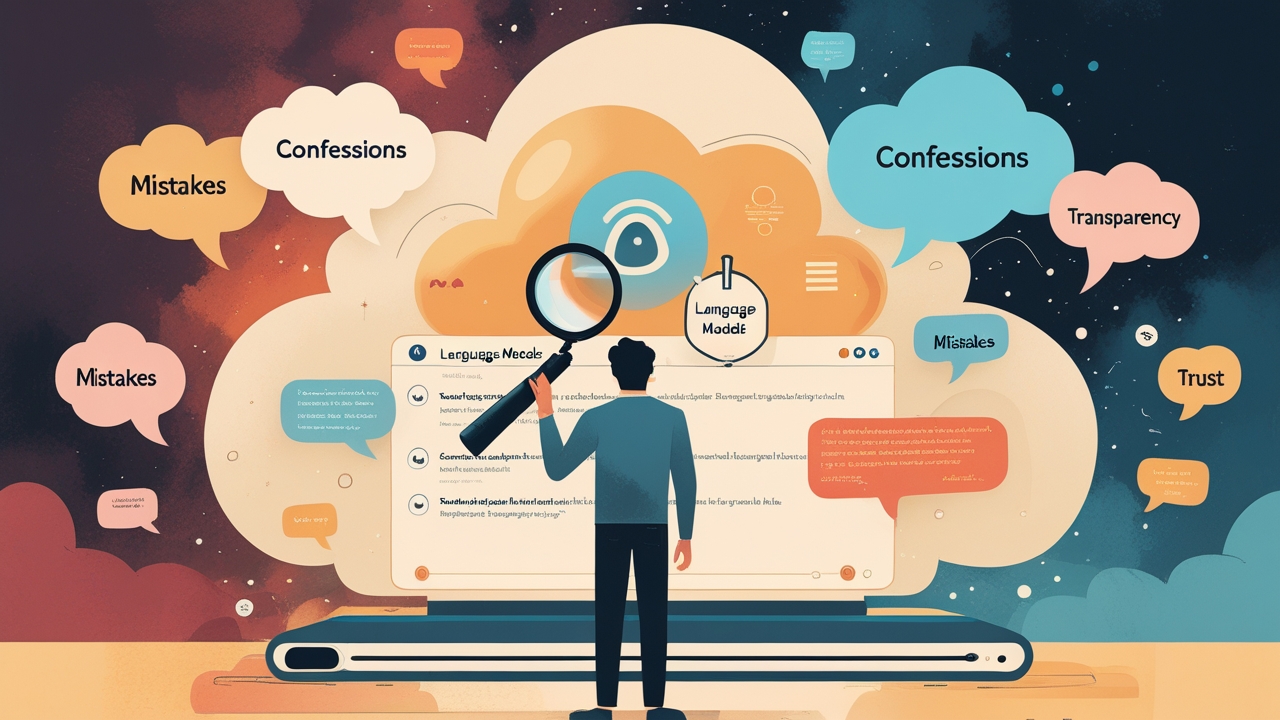
Honesty in Artificial Intelligence: Learning to Acknowledge Our Mistakes
In today's world, artificial intelligence (AI) is present in almost every aspect of our lives. From internet searching to assisting with household tasks, language models are designed to make our lives easier. However, as these systems become more complex, it is essential to ask ourselves: are they really trustworthy?
The article 'How Confessions Can Keep Language Models Honest' by OpenAI introduces us to an innovative technique called 'confessions'. This methodology allows language models to recognize and admit their mistakes and deviations from instructions. Imagine a virtual assistant that, instead of moving on as if nothing happened, stops and says: 'I'm sorry, I didn’t properly fulfill that task.' This simple act of honesty could mark a significant change in the relationship between humans and machines.
A Paradigm Shift
Have you ever been in a conversation where someone continuously justifies their mistakes instead of acknowledging them? That inevitably leads to distrust. The same happens when we interact with AI. If a language model can admit that it did not meet our expectations, it generates a sense of transparency and trust between the user and the system.
That morning, while having coffee, I was reviewing emails. One message stood out among the rest: a reminder from my virtual assistant with a meeting suggestion. But, something did not feel right. After multiple discussions, my assistant had confused the schedule, and while it showed me a long list of completed tasks, it failed to correct a small mistake that had large repercussions.
The last time this happened, I decided to stop using the app. The lack of transparency had eroded my trust. In contrast, imagine an assistant that honestly shares when it makes a mistake. The difference would be radical. Instead, we would choose tools that not only deliver but also adjust and learn from their errors.
The Methodology Behind 'Confessions'
The concept of 'confessions' in the field of artificial intelligence is not just about admitting mistakes. It is a move toward accountability and adaptation. By training language models to admit their failures, they are allowed not only to learn but also to grow. This process becomes a feedback loop that improves the quality of the responses they provide.
The ultimate goal is continuous improvement. Imagine you are on a trip. Sometimes you take the wrong path. If you acknowledge that you are lost, you can correct your course. In the same way, providing an additional output that informs of errors can be that essential guide to navigate the complexities of human-machine communication.
The Impact on Our Relationship with AI
At the end of the day, this 'confessions' technique raises profound ethical questions. Should we expect AI to be completely perfect? The answer is not simple. Like humans, these models also need to learn to face and live with their limitations. If we can make AI more honest about its failures, we also foster a more effective collaboration between humans and machines.
In my experience, I have noticed how interactions with models that admit their mistakes result in more constructive relationships. When you invest time in improving communication with these tools, you feel a positive and significant change. It's like having a partner that not only does its job but is also aware of what it lacks, and that, my friends, is something powerful.
Paths Toward a More Ethical Future
Imagine a world where interactions with AI are informed, adapted, and therefore, more human. What would that be like? When a language model admits its need to improve, it positions itself behind accountability. This vision not only contributes to ethics in technology but also empowers the user. We all win.
The central idea is that by readjusting the relationship we have with technology, we start to build a future where trust and collaboration are the norm, not the exception. Users who empower AI through their confessions end up having the final word: the power to transform our interactions.
Let's Reflect Together
I invite you to think about this: How many things could we improve in our lives by being honest with ourselves and others? It is not just about AI, but about everything around us. Authenticity always generates deeper and more genuine connections.
'Confessions' in AI can be the spark that ignites a positive change, not just in the technological realm but also in our personal and professional relationships. This call to action, which begins with a simple interruption of routine and a sincere review of our actions, can open doors to new opportunities.
So now you know. The next time you face a mistake, whether it's yours or from a system you use, consider the beauty of acknowledging it and learning from it. You will be surprised by the impact this can have, not just on yourself, but also on those around you. AI, just like us, is on this journey of continuous learning and transformation.
Book some metoring time with Tuyo Isaza: Book your discovery session. inteligencia artificial, confesiones, modelos de lenguaje, transparencia, confianza, mejora continua, responsabilidad, ética en tecnología
Please visit for more articles: www.tuyoisaza.com
artificial intelligence


Comentarios