The Inaccessible Experience of Being a Bat: A Reflection on Consciousness
The Inaccessible Experience of Being a Bat: A Reflection on Consciousness
Have you ever wondered what it feels like to be a bat?
This may sound like an absurd question, but the truth is that this inquiry encapsulates a profound reflection on our ability to understand the consciousness of other beings. Thomas Nagel, a well-known philosopher, delved into this curiosity in his famous 1974 essay titled "What is it like to be a bat?" where he explores the limitations of our understanding of subjective experience.
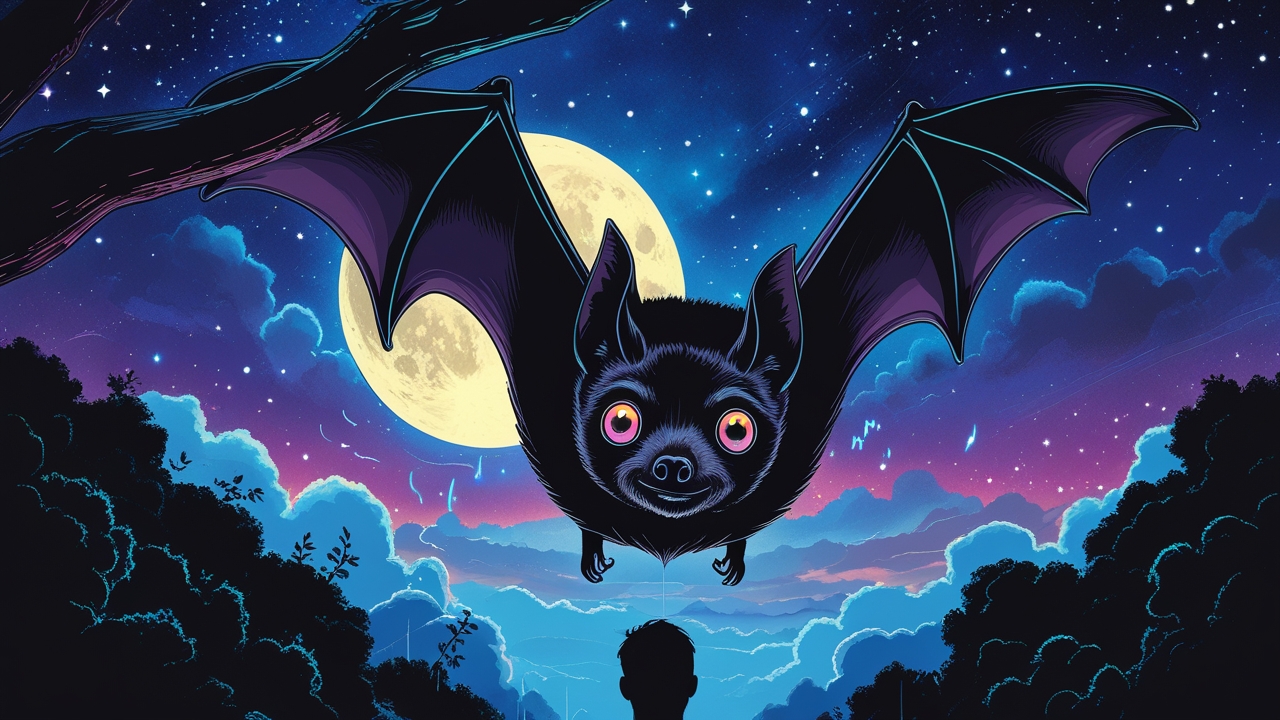
Imagine, for a moment, being in the skin of a bat: darkness as your faithful companion, using echolocation to navigate through shadows, perceiving the world through sounds and echoes instead of images. Let's pause here, can you truly imagine what it feels like? Can your mind translate that experience into your human way of perceiving the environment? The answer is a clear and resounding "no." This is where Nagel makes his point: no matter how much we try, our human perceptions limit our understanding of what it is really like to be another living being.
A Story to Reflect On
Imagine you are in a café, a cozy place where the aroma of freshly ground coffee mingles with the murmur of conversations. You sit across from a friend, sharing laughter and thoughts. Suddenly, you begin to discuss the lives of bats. You have the curiosity to know what their lives might be like, and you imagine flying on a starry night, enjoying that freedom. But, as you talk, you realize that all you are doing is imagining from your own perspective, using your own senses, your own experiences. Do you hear an echo coming back? That is the reality of subjective experience; every attempt to empathize ends in a dead end. Your desire to understand remains frustrated.
When you return home, you sit in a corner, pondering this. You ask yourself: am I being selfish for wanting to understand something that I may never know? Here, the essence of Nagel's essay resonates again: we are incapable of experiencing life from the perspective of another organism. However, this reflection on subjective experience opens up a vast field of possibilities.
The Depth of the Topic
Nagel's essay not only poses a question about the limits of our perception but also challenges our deepest notions of consciousness. Is it possible that by reducing experiences to physical and chemical processes, we are ignoring essential aspects of existence? In the pursuit of a scientific understanding of consciousness, we may be walking towards a pit of simplifications. It is crucial to accept that there are limits to our understanding, and this should not be seen as a failure, but as an invitation to explore beyond.
Sometimes, the profound questions of life do not have simple answers. Instead of allowing that to discourage us, we should see it as a call to deepen our empathy and sensitivity towards other beings. The understanding that we are limited in our perception of reality should open the door to greater appreciation and respect for others’ experiences.
Redefining Our Connections
Amidst these emotions, the desire to connect arises. Remembering the café and the conversation with your friend, there is a palpable reality: we are all on this journey of consciousness together, moving through perceptions, interpretations, and emotions that are our own. Reflecting on our limitations can make us more humble and allow us to open ourselves to genuine encounters with others. The differences in experience are, ultimately, what makes each encounter and each relationship special and unique.
Beyond the Bat
Understanding the experience of being a bat is not just about what it means for them, but what it reveals about us. We are beings who yearn to understand, connect, and expand our experiences. Born from the idea of empathy, this exercise leads us to the bigger question: How can we learn to be more conscious of others’ experiences, even if we cannot live them?
The Conclusion: A Reflection for All
So, the next time you come across a bat flying in the twilight, do not just see it as a strange animal. In its existence, there is a depth that can teach us about our own limits. We should encourage ourselves to recognize that knowledge is a journey, not a destination. In the end, being a bat may seem like an enigma, but it is an invitation to explore our own consciousness.
I invite each of you to reflect on how we can be more open in our quest to understand and connect with others’ experiences. Perhaps, for every bat we encounter, we can find a life story that helps us see beyond our limitations and guide us to build more authentic connections. Because, after all, we are much more than the sum of our experiences.
Book some metoring time with Tuyo Isaza: Book your discovery session. conciencia, experiencia subjetiva, Thomas Nagel, murciélagos, empatía, filosofía de la mente, materialismo, percepción, comprensión, humildad
Please visit for more articles: www.tuyoisaza.com
consciousness


Comentarios