Are We Ready for the AI-Driven Educational Revolution?
Are We Ready for the AI-Driven Educational Revolution?
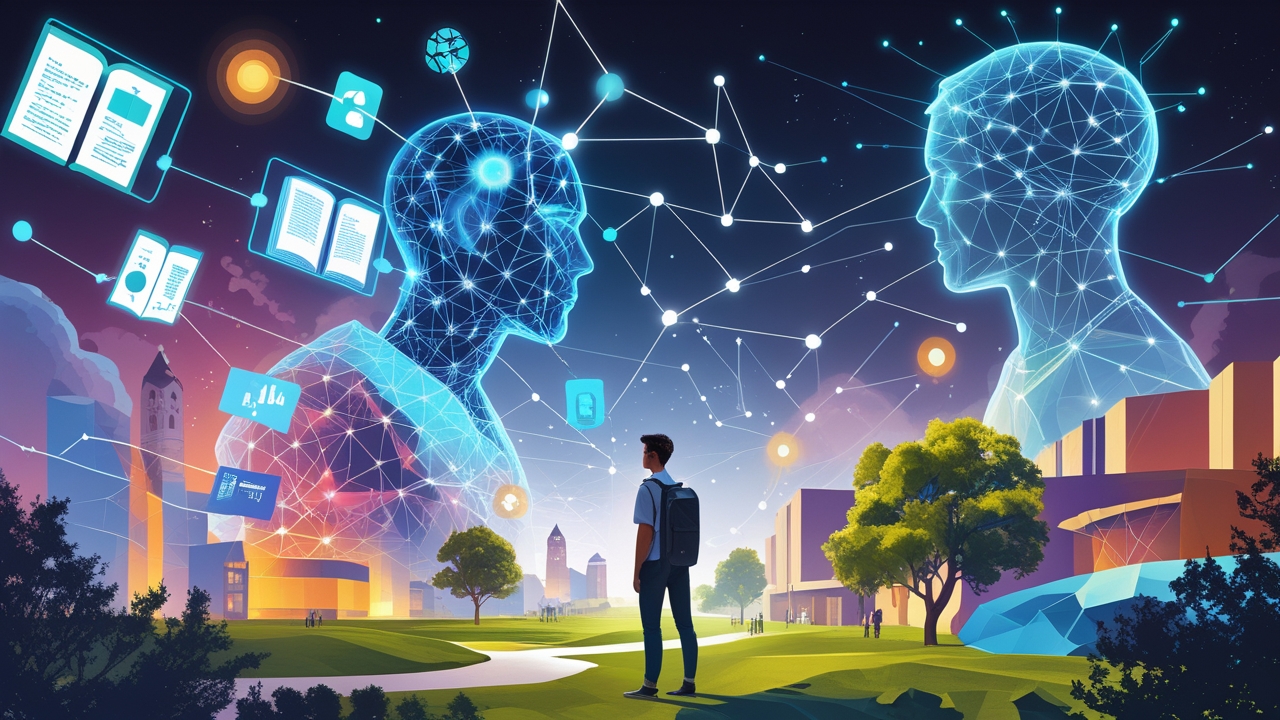
In a world where artificial intelligence transforms the educational landscape, there arises a need to question: are we really prepared for this revolution? Juan Domingo Farnós invites us to imagine a future where the cognitive-algorithmic university not only enhances teaching but also redefines our relationship with learning. But what does this mean for today’s educational leaders?
The relevance of this topic is indisputable in a time when technological tools are changing at a dizzying pace. Leaders have the power to influence how these technologies are integrated into the educational system and how they can benefit from these innovations. The key lies in recognizing that AI is not just a tool, but an ally in building an interactive and personalized learning environment.
Farnós presents a vision where AI acts as an active mentor, tailoring learning to individual needs and fostering a collaboration where everyone is a co-creator of knowledge. In the author’s words, this symphony of learning allows students to act as explorers in their education. If we transpose this to the realm of leadership, the implication is clear: we must become facilitators and guides in educational evolution.
The phrase "culture eats strategy for breakfast" by Peter Drucker resonates deeply in this discussion. In an educational environment that uses AI to transform teaching, a culture of continuous learning must be the foundation upon which any strategy is built. We need leaders who prioritize creating an environment where curiosity and innovation can flourish. By embracing this change, they not only improve their organization but also empower educators and students.
The impact of integrating AI into education transcends mere efficiency and extends towards the democratization of knowledge. Leaders have the responsibility to ensure that all voices are heard and that the digital divide does not prevent anyone from benefiting from these advances. Ethics in the use of AI should not be just a secondary consideration but a fundamental principle guiding every decision.
When addressing the topic of incoming generations in the workplace, the need to adapt leadership styles becomes evident. Young people value customization and technology-assisted learning. Tom Peters reminds us that leadership is not about creating followers, but rather about cultivating other leaders. This approach not only empowers the new generation but also establishes a more collaborative and flexible prism in which everyone can contribute and grow.
As universities delve further into the realms of quantum computing and blockchain, leaders must be proactive in reimagining their organizational structures. Traditional hierarchies become an obstacle if the goal is to promote diversity of perspectives and collaborative work. Towards inclusive leadership, it could be said that we are in a space where everyone should have a voice and vote in shaping the educational future.
Challenges exist and must be managed carefully. Equitable inclusion is not just an ideal but an urgent necessity in the digital age. Above all, leaders must be vigilant about the disparities that technological innovation may exacerbate. As Abraham Lincoln rightly said, what matters is the life in our years, that is, the essence of what we do and the quality of our experiences. Thus, leadership must focus on how our decisions impact everyone’s lives.
The call to action launched by Farnós is a powerful reminder. The responsibility for creating an education where human and artificial intelligence coexist and synergize lies with both educators and leaders. The vision of adaptive learning, where the student is the protagonist, must be the compass guiding our actions.
From this, leaders must implement strategies that ensure ethical and responsible use of AI in education. Here are three practical steps to get started:
- Foster a collaborative learning environment: Encourage active participation from all students, promoting an open and creative dialogue that can integrate different perspectives.
- Prioritize digital inclusion: Ensure that all technological initiatives are designed with equity in mind, facilitating access to tools and resources for all students.
- Develop an ethical code for AI use: Create clear guidelines governing the use of technologies in the classroom, ensuring they are used to complement, not replace, human experience in learning.
The magic of AI-driven education lies not only in the technology but in how leaders navigate and build the necessary bridges to ensure this journey benefits everyone, fostering a bright future.
Discover how artificial intelligence can transform education and what leaders must do to adapt to this new reality.
This article is based on this link: https://juandomingofarnos.wordpress.com/2025/03/14/
Please visit for more articles: www.tuyoisaza.com
artificial intelligence


Comentarios