Trust as a Fundamental Pillar for Scaling Artificial Intelligence
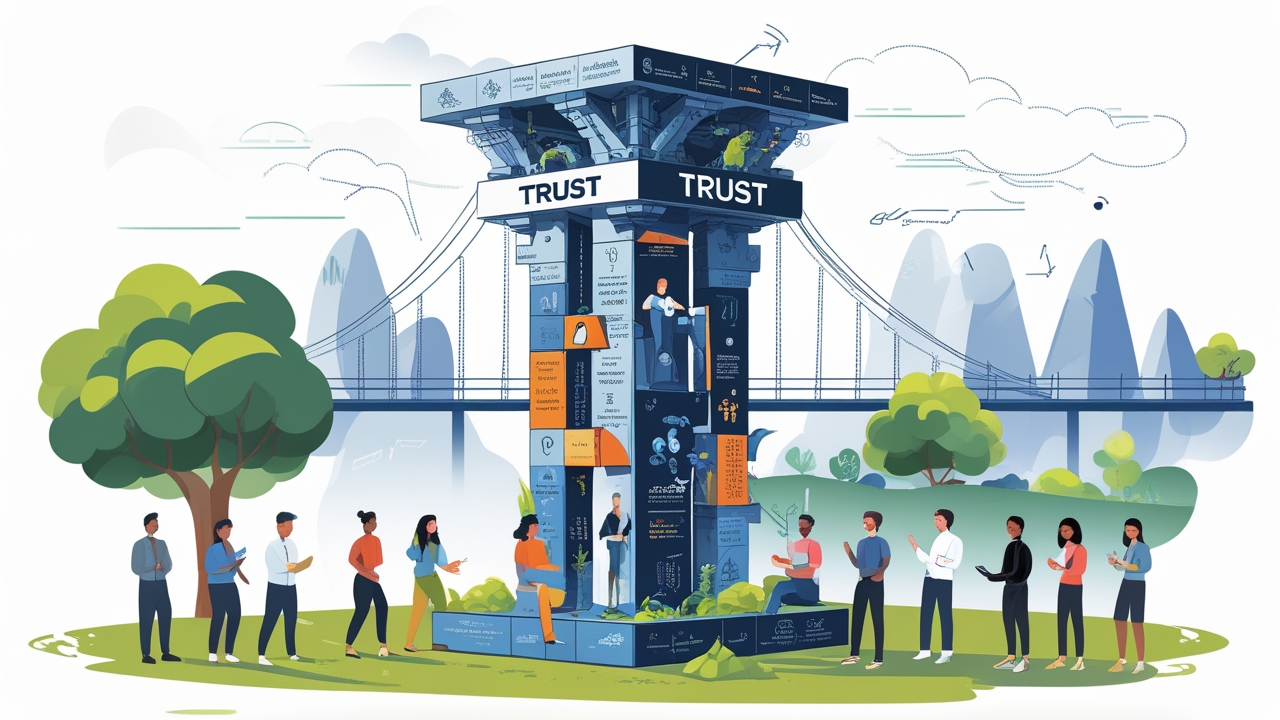
Trust as a Fundamental Pillar for Scaling Artificial Intelligence
In the fascinating journey of artificial intelligence (AI), trust stands as the essential pillar that can take organizations beyond mere adoption of new technologies. As AI becomes an integral part of software development, a crucial question arises: how do we build that necessary trust to truly scale its use?
Living the Gap Between Adoption and Trust
Imagine this: you are a developer in a meeting full of enthusiasm. Everyone is talking about the incredible capabilities of AI tools to automate tasks, optimize processes, and generate amazing results. The room is filled with vibrant energy as you hear testimonials from other teams who are already reaping benefits. You feel excited; it's a technological revolution!
But when the time comes to implement these tools in your own work, something holds you back. Is this really reliable? What if the results are not that good? What if the decisions we make based on those results lead to a critical failure?
This scene reflects a shared reality: the adoption of AI tools has outpaced trust in them. According to Stack Overflow's CEO, Prashanth Chandrasekar, about 80-85% of developers are already using or considering using AI tools, but only 30% fully trust the generated results. This difference reflects our fears, insecurities, and the lack of a solid knowledge base and culture to support this adoption.
Weaving a Trust Infrastructure
So, how can we close this gap? The answer lies in building a robust knowledge infrastructure. This concept is not just a technical term but a comprehensive strategy that enables teams to learn and adapt. Imagine your team not only adopting AI but also understanding its fundamentals. What changes would occur?
Investing in ongoing training is a primary task. Organizations must ensure that their teams not only know how to use AI but why it works that way. This increases trust, reduces fears, and creates an environment where mistakes can be seen as learning opportunities.
The Integration of AI into Business Strategy
When scaling AI, one cannot lose sight of its alignment with business strategy. It is not just about implementing new technologies purely to keep up with competition. It is a conscious and planned integration with organizational objectives. AI should be seen as a strategic partner, not just a mere resource.
Whenever planning to introduce AI, the organizational structure must be reviewed. Imagine multidisciplinary teams where experts in technology, business, and change management work together in harmony, generating an ecosystem where innovation is the norm.
Transforming Productivity
As AI begins to take a significant place in software engineering, one must ask: how is this affecting productivity? Developers are freed from repetitive tasks, allowing them to focus on what truly matters: creativity and innovation. However, this transition can also be distressing. Concerns may arise from the thought that machines could replace humans. But this is where collaboration between humans and machines becomes crucial.
A Collaborative Future
AI has the potential to drastically improve our work dynamics, making collaboration the key to success. Through this collaboration, humans can contribute their intuition, empathy, and understanding. This combination of skills will allow us to amplify the impact of AI rather than fear it.
Conclusion: Walking Towards Trust
Building trust in AI is not a goal that is achieved overnight; it is a constantly evolving journey. As we invest in training and align artificial intelligence with our business strategies, we begin to reap the benefits of this change. Let's envision a future where AI is seen not as a threat but as an ally, where every tool we use inspires trust and creativity. It is essential to take conscious steps towards building this trust, allowing ourselves to be guided by curiosity and the desire to learn together.
Are You Ready to Take the Next Step?
Let’s take a moment to reflect: how can you apply this in your work environment? What skills do you need to develop to feel confident in adopting AI? I invite you to explore these aspects and take steps toward a future where artificial intelligence and trust walk hand in hand.
Book some metoring time with Tuyo Isaza: Book your discovery session. inteligencia artificial, confianza, desarrollo de software, capacitación, estrategia empresarial, productividad, colaboración
Please visit for more articles: www.tuyoisaza.com
artificial intelligence


Comentarios