The Philosophy Behind Artificial Intelligence: Amanda Askell's Transformative Journey
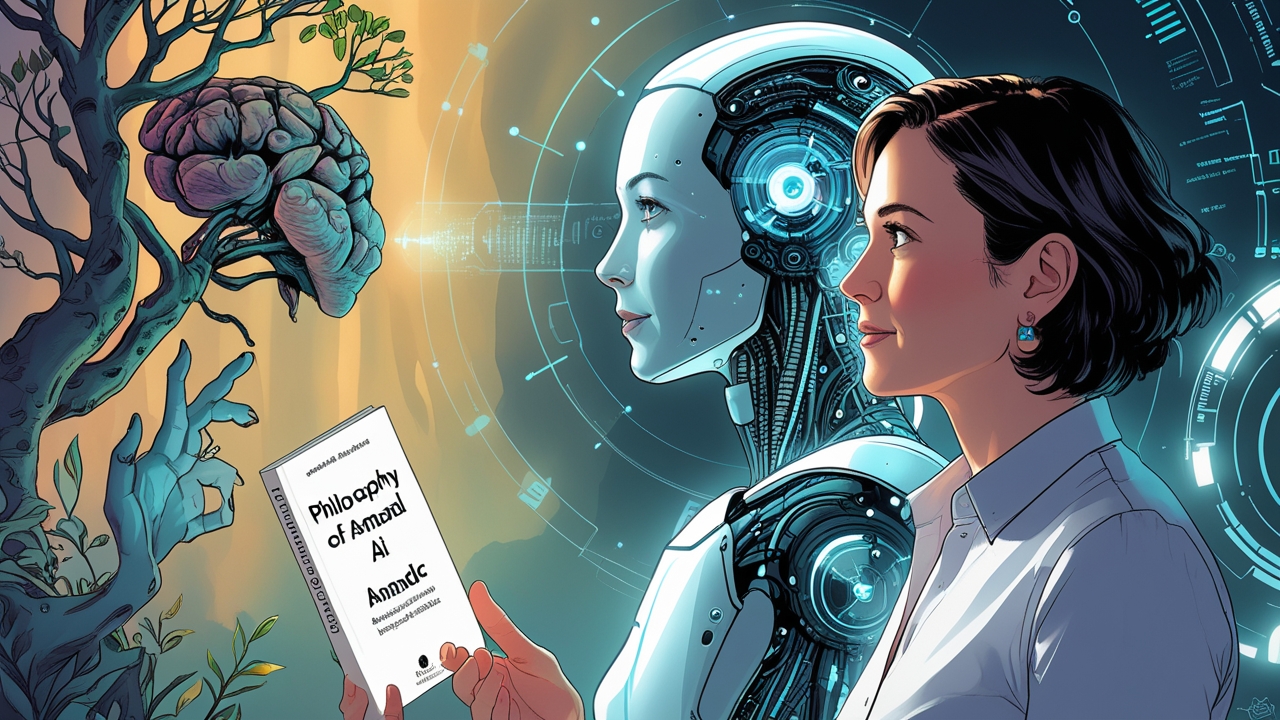
The Philosophy Behind Artificial Intelligence: Amanda Askell's Transformative Journey
The Union of Ethics and Artificial Intelligence
In a world where artificial intelligence is advancing by leaps and bounds, the integration of philosophy into its development emerges as an urgent necessity. Amanda Askell, a philosopher and research director at Anthropic, embodies this vision by combining her deep understanding of logic and ethics with the creation of AI systems that are not only technically competent but also operate in alignment with human values.
A Conversation Between Ethics and Technology
"It is not about finding answers, but about learning to ask better questions." – Rilke. Have you ever stopped to think about the questions that guide your life? In the context of artificial intelligence, these questions not only determine the direction of technology but can also define the quality of our existence in a future where AI plays a predominant role.
A Everyday Story
Imagine a typical day in Amanda Askell's life. She is in her office, surrounded by screens displaying complex algorithms and data graphs. Outside, the sounds of traffic and urban life feel distant. As she reviews the latest advances in research, she can't help but think about the impact they will have on society. A new AI model that can make critical decisions: should it rely solely on technical data, or should it also consider the human context? How far can a machine go? Her philosophical mind is filled with questions.
Amanda pauses to let that unease overwhelm her a little. She often finds herself between a rock and a hard place, grappling with the need to advance technology and the responsibility to ensure that this advancement is in tune with human values. In those moments, she reflects on the idea of social responsibility and recalls what she was taught during her formative years: "Machines can make decisions, but they do not have a moral compass of their own." This ethical perspective is what guides her work.
Why is Philosophy Crucial in AI Development?
Studies show that a robust ethics framework is essential in the creation of artificial intelligence systems. Philosophy allows developers and data scientists to address the ethical dilemmas that arise when programming automated decisions. Amanda knows that beyond writing complex code, it is fundamental to form interdisciplinary teams that integrate not only engineers but also philosophers, sociologists, and other humanists.
This poses a radical shift in the way we conceive programming: it is not just about making algorithms more efficient, but about ensuring that those algorithms are fair and respect the diverse values and needs of each human being. In a context where AI models can perpetuate biases or misinformation, integrating an ethical perspective becomes imperative.
A Future in Cooperation
Undeniably, the challenges posed by AI are complex, but Amanda feels hopeful. Interdisciplinary cooperation not only improves the quality of work, but also ensures that diverse perspectives are taken into account. This collaborative approach not only enriches the development process but also strengthens society's capacity to adapt and evolve in the face of technological changes.
Final Reflections: A Journey Towards Ethics and Responsibility
By considering these approaches, we are faced with the opportunity to shape a future where technology and humanity coexist in a harmonious and beneficial manner. Amanda Askell's story and her work at Anthropic inspire us to recognize the importance of philosophy in technology and to value interdisciplinary collaboration as a path toward a more ethical and humane future.
Reflecting on these viewpoints, it is essential to question how we can contribute to this process of integration and collaboration. What skills and knowledge can we bring to enrich the dialogue between technology and ethics? How can we foster a culture of collaboration that values and promotes the diversity of perspectives in the development of technological solutions? These questions invite us to explore our role in building a future where artificial intelligence is a force for the common good.
Ultimately, by adopting these approaches, we can contribute to the creation of AI systems that are not only advanced and efficient but also reflect and promote the best aspects of our humanity.
Book some metoring time with Tuyo Isaza: Book your discovery session. inteligencia artificial, ética, filosofía, Amanda Askell, Anthropic, humanismo, responsabilidad social, tecnología ética
Please visit for more articles: www.tuyoisaza.com
artificial intelligence


Comentarios