The True Face of AI: Increased Work or Real Efficiency?
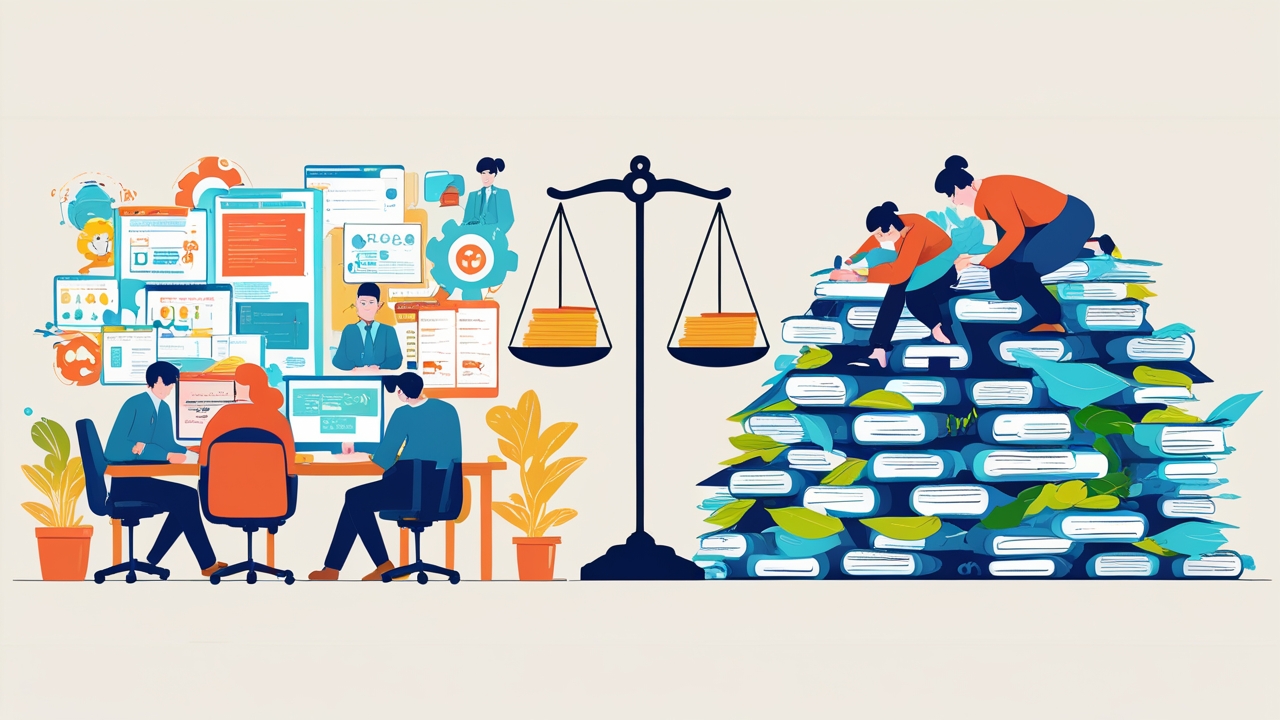
The True Face of AI: Increased Work or Real Efficiency?
Have you ever encountered a tool that promised to make your life easier, only to find that, instead, you ended up doing even more than you did before? That is the reality for many workers today with artificial intelligence (AI).
As companies eagerly jump into the adoption of AI tools, the collective dream is clear: reduce the workload and allow employees to focus on more meaningful tasks. Sounds ideal, right? But what happens when a tool designed to facilitate our work becomes an additional source of pressure?
I invite you to reflect...
Like most of us, I've been there. I remember my first day using a new digital tool. It made so many promises; it would reduce my response time, increase my productivity, and best of all, I would have more time for what really mattered. To my surprise, a few weeks later, I found myself with more tasks and more responsibilities, feeling that the tool, instead of freeing me, trapped me in an endless cycle of work.
This story is not unique. In a recent study conducted at a tech company in the U.S., it was observed that instead of reducing the workload, AI tools led employees to work faster, take on more tasks, and extend their workdays. It seems that human capital responds to the mantra that if technology allows us to do more, then we must do more, and this marks the beginning of a self-perpetuating cycle of intensification.
What is really happening?
Researchers found that workers began to take on responsibilities they previously delegated to others. Digital managers coding, designers writing code, and even researchers taking on engineering tasks. This is something that can be easily seen in day-to-day life: a programmer who, empowered by AI, starts to 'play around' with code, opens the floodgates and realizes he's diving into deeper waters than anticipated.
Yes, artificial intelligence can transform the 'how' we perform our work, but it can also swallow the line between personal and work time. One moment you’re enjoying a coffee, the next you’re asking a chatbot to help you with a problem that, until recently, you would have left for the next day. These small interactions, which seem harmless, add up and can wear us down, inhibiting our ability to truly disconnect.
More tasks and fewer breaks
As we embrace the 'digital companion,' multitasking becomes our new daily bread. Everything seems more accessible; AI promises to be our assistant, but what mostly happens is an increase in our cognitive load. In the end, the question is: Are they really helping us? Or are they just pushing us towards a more frenetic and stressful work environment?
In many contexts, employees report that they are busier than before the adoption of AI, they feel more pressured, and yet, less satisfied with the results. The work cycle seems relentless, and moments of reflection and rest become something of the past. Let us understand this transformation as a critical area that needs attention. We are talking about mental health at work, recommendations to avoid burnout, and the impact on decision-making.
The importance of a balanced AI practice
The solution is not simply to avoid using AI or disable time-consuming tools. What we need to develop is what researchers call an 'AI practice.' This involves establishing clear guidelines on how we should use these tools, when to pull back, and how to expand or restrict our tasks in a healthy manner.
We talk about being intentional in our breaks. Imagine, for instance, scheduling a break after finishing a project, where we can truly disconnect and assess our process. Small moments like this allow us to absorb what we've learned before moving on. This not only helps in making more measured decisions but also creates a space for our ideas and creativity to regenerate.
Sequencing and human connection
Moreover, we need to create an organized workflow, where sustained attention time is prioritized. Maintaining a structured order helps reduce distractions. Encourage your teams to focus on defined priorities and avoid the anxiety of having multiple tasks open simultaneously.
But even beyond sequencing, let us remember the importance of human connection. Despite the effectiveness of AI, there are aspects of our work experience that can only be addressed by humans: authentic connections, moments of listening, and shared reflections. Creativity and innovation flourish at the intersection of diverse perspectives; AI, while powerful, cannot replace your valuable voice.
Final reflections
Artificial intelligence, like any tool, can be a double-edged sword. It makes some tasks easier for us and yet can intensify our workload if we're not careful. As we embrace this new chapter in our work lives, critical questions arise: How can we ensure that technology is our ally and not our burden? Is it possible to find a balance that allows us to be efficient without sacrificing our wellbeing?
I invite you to reflect on these issues. What is the next action you can take to integrate AI in a way that benefits you? I encourage you to consider those small changes in your daily routine that can make a difference. Remember, ultimately, you have control over how technology will impact your work life.
A call to action
I invite you to explore more about how you can implement AI practices in your daily life. You don’t have to do it alone; there are resources, guides, and communities ready to support you on this journey. Click the link in my bio for more tools and to start transforming your work environment today.
Book some metoring time with Tuyo Isaza: Book your discovery session. Inteligencia Artificial, Carga Laboral, Estudio de Caso, Bienestar en el Trabajo, Productividad, Salud Mental, Práctica de IA
Please visit for more articles: www.tuyoisaza.com
Artificial Intelligence


Comentarios