The Future of Military Leadership: Integrating Artificial Intelligence into Officer Training
The Future of Military Leadership: Integrating Artificial Intelligence into Officer Training
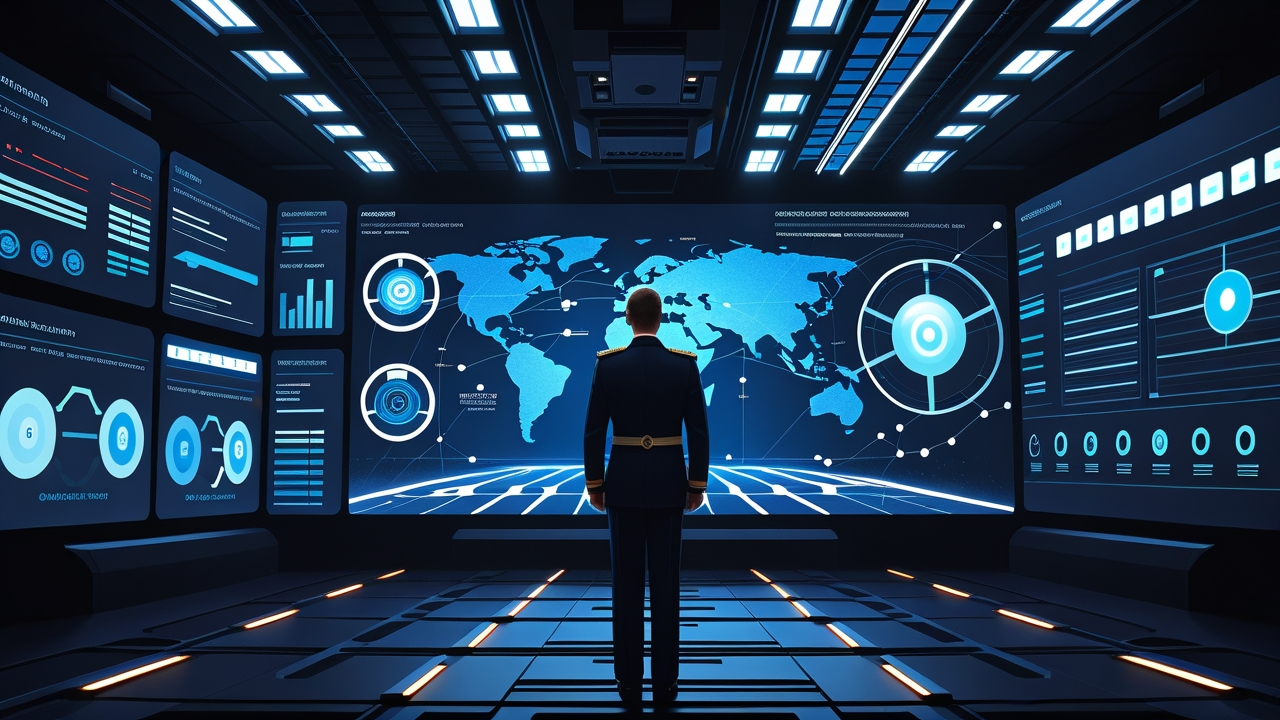
Imagine a scenario where military leaders not only make decisions based on their experience, but also rely on real-time data analysis provided by artificial intelligence. How could this radically transform the way officers approach critical situations in warfare and conflict scenarios? The integration of AI into military leadership is not just an option, but an urgent necessity in an increasingly complex and changing world.
Leadership today faces unprecedented challenges. Global uncertainty and the rapid evolution of conflicts compel leaders to continuously develop and adapt in real-time. In this sense, incorporating AI into military training plays a crucial role, enabling future leaders to be not only prepared but also equipped with tools that allow them to act effectively in uncertain operational environments.
Reflecting on the original text, we are reminded that "leadership is defined not only by tactical strategy but by its ability to inspire and unite subordinates." This quote resonates today, where ethics and responsiveness are as important as strategic decisions. AI can facilitate this cohesion by optimizing communication and collaboration among teams, which is fundamental in a military structure where time is of the essence.
The influence of AI in leadership is not limited to technical issues. The adoption of new technologies has the potential to transform the organizational culture within the Armed Forces. In cultures where innovation and adaptability are valued, leaders can cultivate a more collaborative and receptive environment. In this context, the famous saying by Peter Drucker, "Culture eats strategy for breakfast," is more relevant than ever. For AI to be effective, it is essential that leaders foster an environment where continuous learning and technology are integral to personal and professional development.
As new generations of leaders enter the Armed Forces, they bring with them an innate understanding of advanced technologies. This generational shift not only changes the way military strategies are perceived and applied but also creates a conducive climate for adopting tools like AI. These young leaders, capable of creating the future, will have the responsibility of implementing tactics that integrate both traditional values and technological innovation.
However, the implementation of AI should not be an uncontrolled path. Every technological advance entails a commitment to ethics and responsibility. John C. Maxwell's phrase, "The ultimate test of a leader is not the number of decisions they make, but the quality of those decisions," reminds us that the effectiveness of a leader does not depend on the speed of action but on the wisdom and consideration behind each decision. The adoption of AI must be accompanied by constant reflection on how it is applied and how it can affect both the mission and the people involved in it.
The military organization must also adapt to the new challenges posed by AI. This means that traditional hierarchical models must be reassessed. As AI is adopted, there is an opportunity to foster more collaborative and decentralized leadership. The notion that "a leader is one who knows the way, follows the way, and shows the way" can be expanded to include the power of collective intelligence, where all members are empowered to contribute and make informed decisions together.
To lead in this new era, here are three practical steps you can implement:
- Foster a continuous learning environment: Establish regular training programs and workshops on artificial intelligence and new technologies as an excellent first step. This will help officers stay abreast of the latest trends and applications in their field.
- Promote collaboration: Implement spaces and opportunities for different hierarchical levels to work together on projects that utilize AI. This will not only strengthen team cohesion but also provide diverse perspectives for solving complex problems.
- Establish a clear ethical framework: Ensure that everyone in the organization understands the ethical principles that should guide the use of artificial intelligence. Developing a code of ethics that addresses this aspect will be crucial for maintaining integrity and trust in decision-making.
As we embrace this new paradigm in leadership, let us remember that the true essence of leadership lies not only in the ability to make informed decisions but in how those leaders inspire, motivate, and truly connect with their subordinates. Only then can we successfully navigate the turbulent seas of military future.
Discover how artificial intelligence is transforming military leadership, creating officers who are not only competent but also ethical and transformative in times of change.This article is based on this link: https://www.defensa.gob.es/ceseden/-/esfas/revolucionando_el_liderazgo_militar_implementacion_de_la_inteligencia_artificial_en_la_formacion_de_oficiales
Please visit for more articles: www.tuyoisaza.com
MilitaryLeadership


Comentarios