Is Artificial Intelligence Transforming Education and Leadership as We Know It?
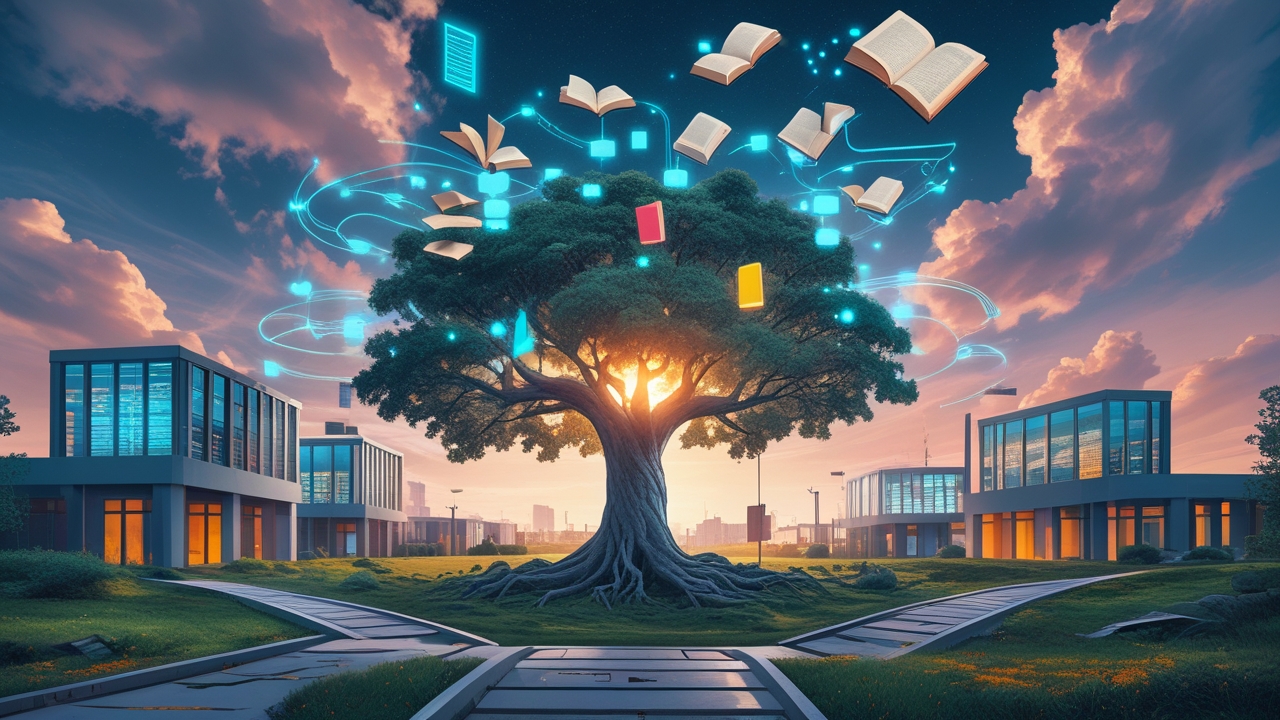
Is Artificial Intelligence Transforming Education and Leadership as We Know It?
In a world where technological innovation is advancing rapidly, there is one tool that stands out for its transformative potential: artificial intelligence (AI). This scenario raises an intriguing question: how can AI not only improve education but also redefine leadership in the educational realm? As we reflect on these transformations, it is vital for leaders to adapt and evolve in an environment where AI becomes an essential ally in the teaching and learning process.
For today's leaders, embracing AI is not just about keeping up with technology; it is an opportunity to create a culture of continuous learning and adaptation. This is a crucial moment where those in command must understand that "culture eats strategy for breakfast," as Peter Drucker said. This aphorism resonates deeply in the modern educational context, where the integration of AI can foster an environment where innovation and inclusion thrive, and where every student, without exception, can become the architect of their own learning.
As we discuss the importance of AI in education, it is essential to propose that this advancement also requires a shift in the way we think about and practice leadership. AI, when applied effectively, allows educators to deliver more personalized learning experiences. Therefore, leaders must reassess how they structure their teams and processes, promoting collaboration and flexibility. The ability to adapt to these technologies is not only crucial for teachers, but also sets a model for students who are growing up in an increasingly digitalized world.
The article "Uploaded Intelligence" reminds us that one of the most inspiring aspects of using AI in education is its ability to adapt to the individual needs of students. Artificial intelligence can identify strengths and weaknesses, offering specific resources that personalize the learning experience. This not only improves academic performance but also creates an inclusive environment where every student has the opportunity to shine. This approach to individualization is a vital lesson for leaders: understanding that each person on their team has a unique set of skills and needs is key to maximizing their potential.
The implications of this approach are profound. In times when uncertainty and change are constants, ethical and reflective leadership becomes essential. Leaders must prioritize ethical frameworks in their decision-making processes. Simon Sinek reminds us that "the greatest ethical test of a leader is whether they can make decisions that are in the best interest of all stakeholders." When applying this philosophy to the use of AI in education, the need arises to ensure that technology is an equitable tool, accessible to all students, regardless of their background or context. This is where a monumental challenge is established, one that offers a transformative perspective for academic leadership.
Staying aware of how quickly technology evolves leads leaders to reflect on their working methods. Educational leaders must be aware that their teams also need to understand these new technologies. Hans Rosling, a speaker on world development and AI, often highlights that "the right information at the right time can change the world." Similarly, empowering educators with technological resources and training to implement AI in their teaching can create a positive multiplier effect in the classroom. Each advancement in this direction brings us closer to an educational system that not only adopts AI but utilizes it as a positive force for social change and inclusion.
Finally, the way leaders approach the implementation of AI impacts not only the educational realm but also extends to their own leadership style. Being a leader in this changing environment requires a combination of technological skills, ethical sensitivity, and a commitment to cultural adaptation. How leaders prepare to face these challenges can define not only their personal success but also that of all those they guide. Therefore, here are three practical steps that leaders can implement immediately:
- Encourage continuous training: Establish training programs for your team that address artificial intelligence and other emerging technologies.
- Promote an inclusive culture: Ensure that all voices are heard and valued, adapting teaching strategies to the individual needs of students.
- Adopt an ethical approach to decision-making: Assess how decisions about AI impact all stakeholders, ensuring that all students have equitable access to tools and resources.
In this era of technological transformation, every leader has the responsibility to be a pioneer in the integration of AI in education. By adopting a proactive and human-centered approach, we can unlock the true potential of our educators and students, fulfilling the promise of a tomorrow filled with possibilities. Undoubtedly, leadership in the context of artificial intelligence will be remembered as a watershed moment in the history of education.
This article is based on this link: https://www.researchgate.net/figure/Publications-on-Assessment-Using-AI-Joanne-et-al-2024_fig2_382521248
Please visit for more articles: www.tuyoisaza.com
artificial intelligence


Comentarios