AI as an Ally: A Path Towards More Human Leadership
AI as an Ally: A Path Towards More Human Leadership
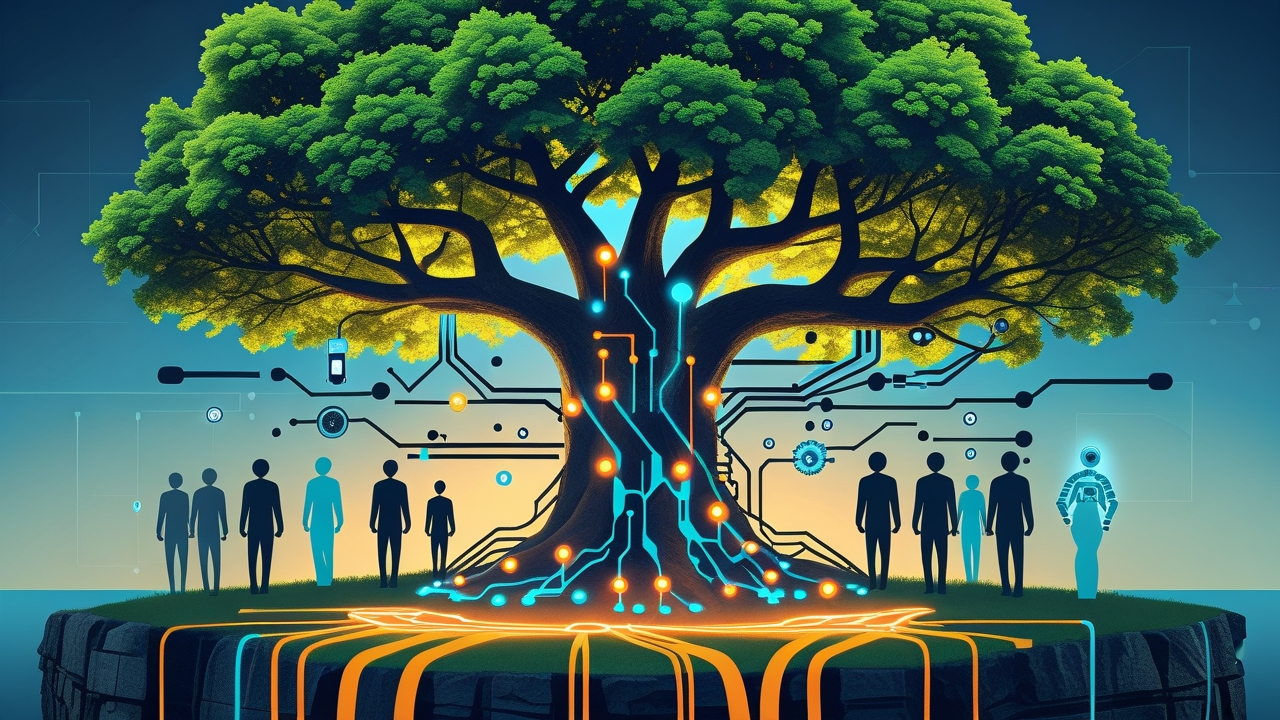
In a world where artificial intelligence has ceased to be a mere futuristic idea and has become part of our daily lives, a crucial reflection arises: can this powerful technological tool teach us to be more human? In times when interpersonal connections may be threatened by automation, the answer is not only affirmative but also transformative for today's leaders.
The importance of this topic lies in the need for today's leaders to adapt and evolve in a constantly changing technological environment. While some view AI as a potential threat, visionary leaders understand that it is an invaluable opportunity to rediscover and strengthen our human qualities. The question we all must ask ourselves is how we can integrate AI into our leadership to enhance empathy, creativity, and collaboration.
Artificial intelligence has the potential to play a crucial role in our lives. As mentioned in the original article, AI can be a “powerful ally on our path to better understanding what it means to be human.” It is essential that leaders do not see automation as an enemy of humanity but as a resource that can free us from repetitive tasks, allowing us to focus on what truly matters: meaningful human interactions. This process of liberation is what allows us to deepen our interpersonal relationships and, therefore, cultivate a powerful sense of community within our organizations.
Leaders have the responsibility to develop an organizational culture that prioritizes empathy and collaboration. In this sense, as Mahatma Gandhi said, “the best way to find yourself is to lose yourself in the service of others.” It is precisely this mindset that should govern workplace environments where AI is used to foster understanding and connection among team members. The integration of AI tools in work relationships can not only facilitate processes but also enrich us emotionally by allowing us to focus on the growth of our relationships.
From a technological perspective, it is essential that leaders adopt an innovative approach that sees AI as an extension of our human capabilities. The connection provided by technological tools reminds us of Stephen Hawking's vision: “We are all now connected by the Internet, like neurons in a giant brain.” This approach invites us to use technology to enhance collective intelligence and our capacity for collaboration. Leaders who adopt this mindset not only position themselves as pioneers in their industry but also establish an environment that fosters the growth and development of their teams.
Each generation interprets technology and interpersonal relationships in different ways. This creates a unique opportunity for younger leaders to promote the role of AI in strengthening human connection. As Brian Tracy states, “your life is a reflection of your thoughts. If you change your way of thinking, you change your life.” If leaders can influence perceptions about AI, they will be able to foster a generational synergy that bridges technological gaps and promotes an inclusive and collaborative environment.
However, with the power of AI also comes the responsibility to use it ethically. Establishing a clear ethical framework for the use of these technologies will empower leaders to manage their organizations from a place of integrity and accountability. Indeed, Brian Tracy's phrase, “the ultimate test of a leader is what happens in their absence,” underscores the need to ensure that AI is applied in a manner that respects and upholds human values. Leaders must work continuously to build trust within their teams and with their clients, ensuring that the use of AI does not compromise our most outstanding qualities as human beings.
Additionally, leaders have the opportunity to use AI to optimize repetitive tasks, enabling their teams to focus on strategic and creative initiatives. This organizational transformation is crucial for maintaining competitiveness in such a dynamic world. Steve Jobs noted that “innovation distinguishes between a leader and a follower,” and in this context, leaders must adapt and innovate, redefining roles and responsibilities to maximize the potential that AI offers. Technology should be a support that drives creativity, not the opposite.
The message is clear: artificial intelligence is not the end of our humanity but the beginning of a new era where we can learn to be more human if we know how to embrace this journey. As leaders, it is our responsibility to allow AI to empower the best in us. The real question is whether we are willing to seize this opportunity.
To facilitate this process, here are three practical steps you can implement in your leadership:
- Foster empathy: Create discussion spaces where team members can share their thoughts and feelings about technology and its impact on their work. Use AI tools that facilitate communication and connection.
- Promote ethics in AI: Establish clear guidelines on the ethical use of AI in your organization and ensure that all team members understand and adhere to these principles.
- Redefine roles: Analyze how AI can free your teams from repetitive tasks and allow them to focus on creative and strategic projects, thus favoring continuous adaptation and innovation.
This journey towards more human leadership, guided by artificial intelligence, will not only transform our organizations but also the world we live in. The opportunity is before us, and it is time to take the reins in this exciting process.
This article is based on this link: https://revistaseug.ugr.es/index.php/acfs/article/download/24710/25205/100268
Please visit for more articles: www.tuyoisaza.com
artificialintelligence


Comentarios