What Happens When Philosophy Meets Artificial Intelligence?
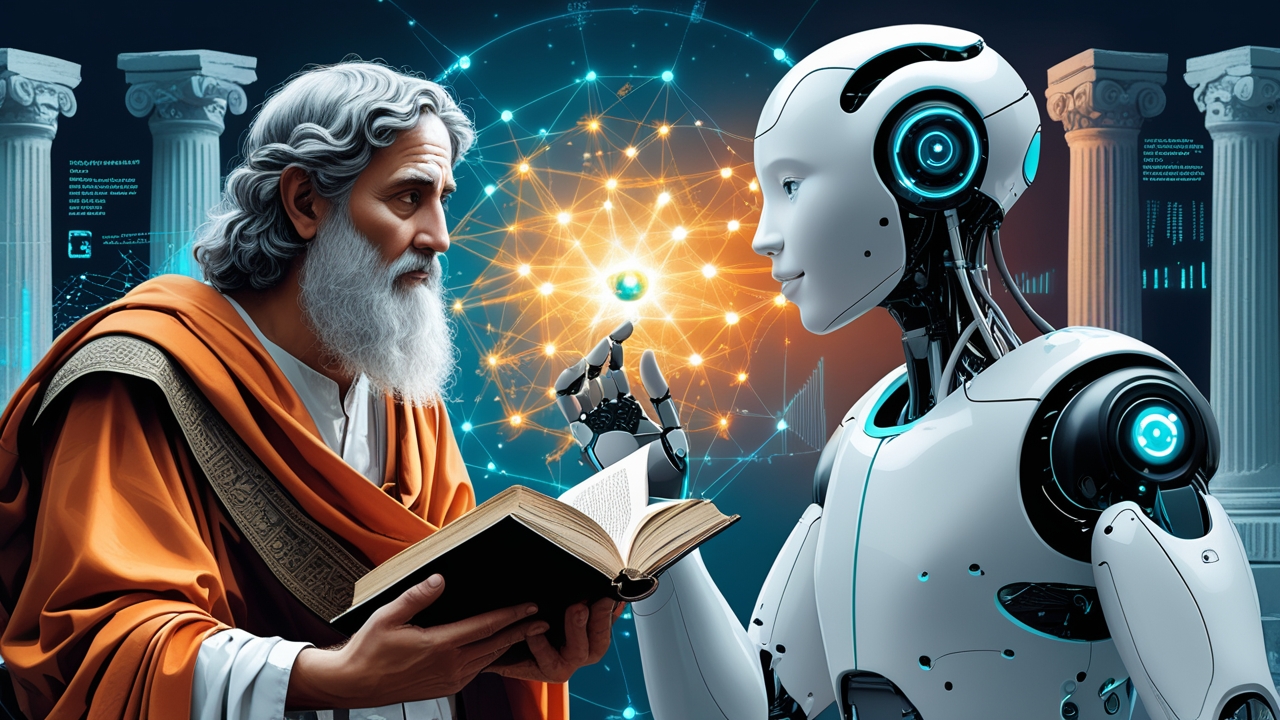
What Happens When Philosophy Meets Artificial Intelligence?
In 2011, the visionary Marc Andreessen proclaimed that "software is eating the world." It's a powerful phrase, followed by a disheartening movement that has transformed entire industries. The majestic wave of technological change has swept us all along, especially those of us in the realm of technology and business.
But what happens when that same wave encounters artificial intelligence (AI)? In 2017, the co-founder of Nvidia, Jensen Huang, hinted at the deep interconnection by stating that "software is eating the world, but AI is eating software." Our days are marked by an eternal quest for advancement, where algorithms are replacing human work, and where AI becomes the axis of all technological development.
However, as we continue on this path, there is a latent disruption that we may not have considered enough. Something that, silently, infiltrates our AI systems and questions both their functioning and their internal philosophy. The answer is, surprisingly, philosophy itself.
Philosophy Devours AI
Now, I want you to take a moment and reflect on this. To the same extent that code brings AI to life, it is philosophy that determines how we conceive of and use that life. While ethics and responsibility in AI dominate the discussion, there are numerous philosophical questions that invite deep introspection. What should we expect AI models to achieve? How can we define knowledge in a data-saturated world? And how does AI narrate the reality in which we live?
Imagine you are running a company that wants to implement artificial intelligence. Before diving into this fascinating technological world, it is crucial that you explore the philosophical background that will drive this implementation. Ignoring those principles can lead to wrong decisions that affect not only the final outcome of the technology but also the ethics of the work you are doing.
A Daily Story of Philosophical Confrontation
Let me tell you a story. A couple of years ago, a close friend, a coder and technology enthusiast, immersed himself in an AI project. It was a hot sunny day when we met at a café. As he spoke about his data review and model training, a knot began to form in my stomach.
I was prompted to ask, “Do you really know what you are creating? What is the intention behind your work?” His gaze filled with confusion. There he was, immersed in coding, blind to the responsibility that his creation entailed. Just as the digital world transforms, our decisions must be guided by deep reflection, a moment of philosophical confrontation.
His work—so technical and dedicated—lacked that introspection that could have anchored it in essential values and principles. Together, we tackled the dilemmas that his AI could pose. The essence of what he was building would not only impact his career but also the people who would use his model. It was the first step toward making more responsible decisions. We left the café with more questions than answers, that unsettling freedom to explore without limits.
A New Era of Meaning
The question looming over us is: how can we integrate those philosophical reflections into our interaction with AI? The answer may be as simple as returning to the principles upon which we founded our purpose. Those principles empower and shape our decisions. It is not just about creating technically efficient solutions, but about cultivating a deep understanding of what technology truly means for humanity.
By opening this discussion about our own principles, we begin to see the value of what may have initially seemed a barrier. Philosophy takes us on a path toward an ethical horizon, where we can build technologies that reflect our values and not just our technical capabilities. It is a journey that requires commitment and self-critique.
A Call to Action
So, when you think about how technology is impacting your field or your life, remember that philosophy has an integral role in creating artificial intelligence. Don't rush to implement the next AI solution just because it's trending or because everyone else is doing it. Do it with intention and knowledge. Continuously evaluate the principles that guide your decisions, and look for ways to integrate philosophical reflection into your projects. Ensure that every step on the path toward automation and intelligence is guided by compassion, ethics, and curiosity about the impact on all of us.
Let’s end with a thought: how can you involve philosophy in your daily life and technological decisions? Open the door to curiosities and questions that you may have never considered. The adventure is just beginning.
Book some metoring time with Tuyo Isaza: Book your discovery session. Inteligencia Artificial, Filosofía, Ética, Tecnología, Desarrollo, Innovación, Reflexión, Crecimiento Personal
Please visit for more articles: www.tuyoisaza.com
Artificial Intelligence


Comentarios