Ethics in Artificial Intelligence: A Path Towards Freedom from Suffering
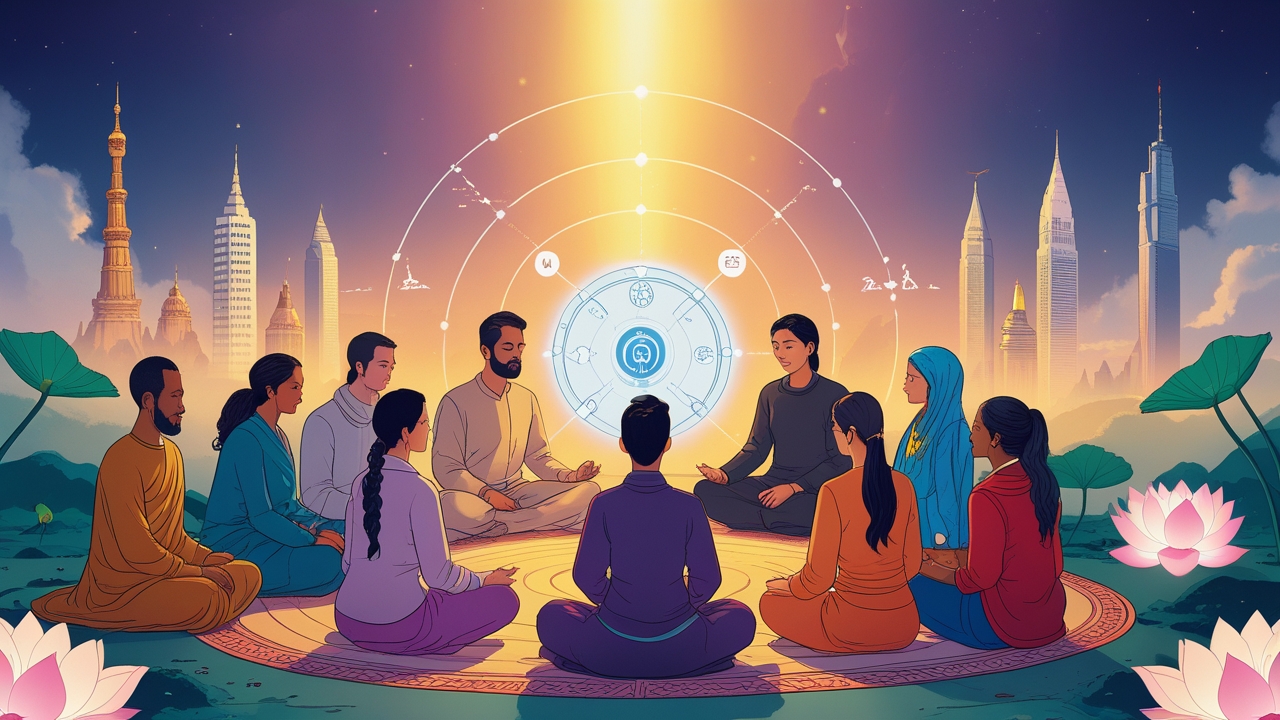
Ethics in Artificial Intelligence: A Path Towards Freedom from Suffering
Discovering the Meaning Behind Ethics in AI
Artificial intelligence has become, more than ever, a recurring topic in our daily lives. But have you ever wondered what the true purpose of ethics in AI is?
I recently attended a talk by Professor Soraj Hongladarom, who proposed a unique perspective on the topic. In his speech, he invites us to view AI ethics not merely as a set of guidelines but as a path that seeks to alleviate human suffering. This idea resonates within and makes you reflect: “How can technology help us be free from suffering?”
With the growing proliferation of ethical guidelines in AI globally, ranging from respect for human dignity to the promotion of economic competitiveness, the challenge lies in finding common ground that integrates these diverse guidelines.
A Global Conversation on Ethics
Today, there are hundreds of ethical guidelines for AI around the world. Although many share basic principles—such as respect for privacy and protection of human dignity—we also find significant divergences in their approaches. Professor Hongladarom pauses at a key point: Is it possible to find a common foundation that unites all these guidelines, considering different cultures and philosophies?
In his analysis, Hongladarom suggests that Buddhism offers a solid foundation. Instead of focusing on the diversity that separates us, it may be more valuable to center on our shared humanity: we are all sentient beings who wish to be free from suffering.
Suffering as Unification
This idea may sound simple, almost obvious, but when we delve deeper into it, we find a powerful reason to rethink how we interact with technology. The proposal is that ethics in AI should align with the goal of helping people liberate themselves from suffering. The question then becomes: How do we build AI that truly promotes human well-being?
In the talk, the professor states that ethical guidelines in AI should not only focus on technical regulations but also provide values that guide us towards this common goal. These values, according to Hongladarom, could be drawn from Buddhist principles without necessarily having to label them as such. At its core, ethics in AI must be based on the universal desire to alleviate suffering.
Culturally Specific Divergences and Convergences
Throughout his research, Hongladarom and his colleague explored non-Western guidelines on ethics in AI, such as those from various Asian countries. This analysis revealed that while some principles are universal, others reflect specific cultural concerns, such as the economic competitiveness evident in Thailand's guidelines.
This highlights an important point: different cultures have different priorities. However, finding metrics that can unite us is essential for creating a cohesive ethical framework, especially in a world where technology and our lives are more interconnected than ever.
Prescriptive Elements and Collective Reflection
This is where collective ethical discussions come into play. The challenge is to create a space for different perspectives to be expressed, respecting differences while also seeking ways to come together. As the professor suggests, the solution lies not in forcing homogeneity but in finding a “meta-principle” that captures the best of each ethical and cultural tradition.
As Professor Hongladarom notes, the path towards a harmonized ethical framework is neither simple nor quick, but it is vital. The quest for ethics in AI founded on the liberation from suffering can lead us to question how aligned our technologies are with these ideals.
Final Thoughts: Learning to Be More Human
Upon the conclusion of the talk, I couldn't help but feel inspired. Often, technology drives us to think in terms of efficiency and progress. But we must remember: the true measure of our advancement lies in our humanity. What Professor Hongladarom has left us is an invitation to ask not only what AI can do for us but also what we are doing for others through AI.
Perhaps the first step is to reflect on our own experiences: how has technology affected us? Has it brought us more connection or isolation? Are we using these advancements to liberate ourselves or to limit ourselves? These are crucial questions in the growing conversation about ethics in artificial intelligence that we must continue.
Book some metoring time with Tuyo Isaza: Book your discovery session. inteligencia artificial, ética, sufrimiento, budismo, conexión humana, diversidad cultural, marco ético, tecnología
Please visit for more articles: www.tuyoisaza.com
artificial intelligence


Comentarios