Are You Ready to Lead in the AI Era?
Are You Ready to Lead in the AI Era?
In a world where artificial intelligence is becoming part of our daily lives, a crucial question arises: are you equipped to lead in this new era? As we reflect on the future of work, it is inevitable that we will face challenges that will transform not only our way of working but also the very essence of leadership. This transformation demands a deep change in how we understand collaboration, decision-making, and team-building.
The importance of this topic cannot be underestimated. Today's leaders are responsible for navigating through the turbulence that AI has brought with it. They must be willing to let go of traditional leadership models and adopt a more collaborative approach, where humans and machines complement each other rather than compete. As has been mentioned, "success in artificial intelligence is not just about technological innovation, but about how that technology can be used to empower people." This human-centered approach is what will define effective leadership in the future.
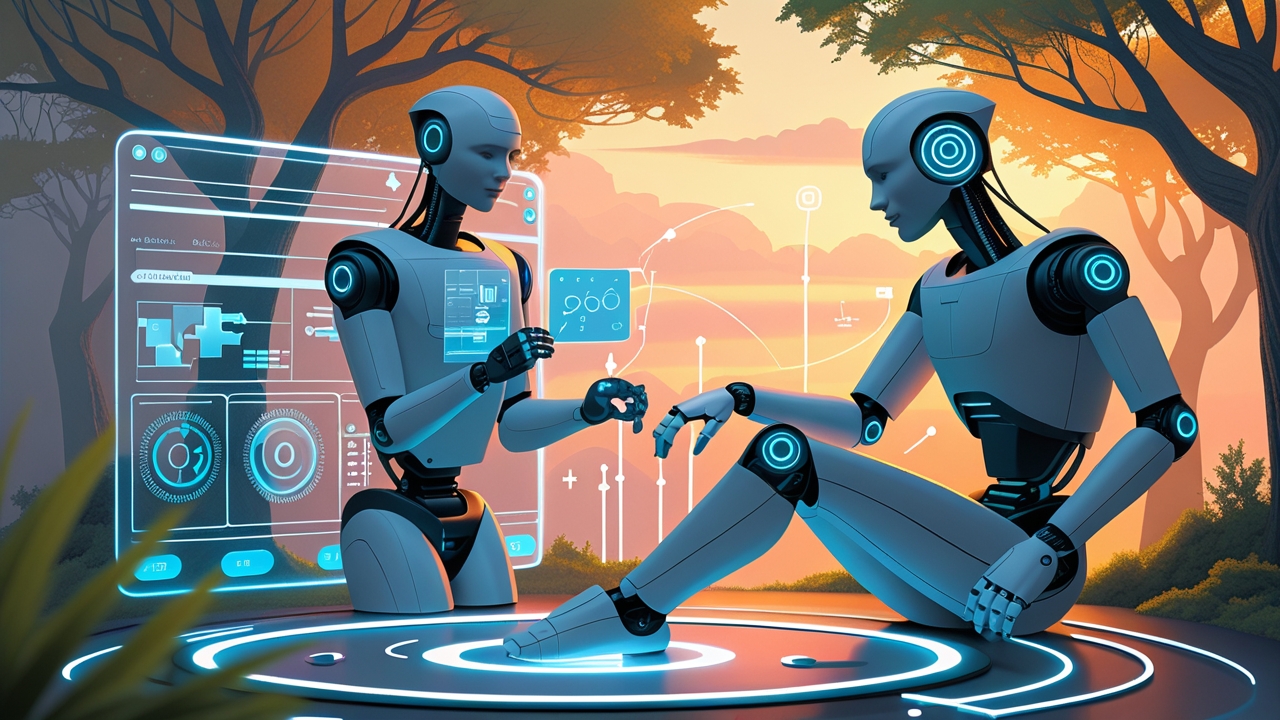
To understand how this manifests in practice, it is key to observe how leaders must start from the foundation, adapting to a constantly evolving environment, and not clinging to traditional ascent paths. This new path requires courage and an open mindset. Collaboration between humans and machines is the next frontier. In a world where technology is advancing by leaps and bounds, a leader's ability to foster meaningful relationships with both their human team and technological tools will be fundamental. It is not just about using AI as a mere tool, but integrating it in a way that maximizes the strengths of each party involved.
The development of social skills in a high-tech context is another critical challenge. As AI becomes more common, so does the need for leaders with strong emotional intelligence. The ability to inspire, motivate, and unite a team will be more crucial than ever. Celebrating diversity and creating an inclusive work environment will not only enhance employee well-being but also foster creativity and innovation, key factors for continuous adaptation.
When we talk about adaptation, the reality is that change is a constant. Leaders cannot afford to be left behind in this evolving world. Continuous training and willingness to learn are essential. To address these challenges and seize the opportunities that AI offers, there are practical steps that every leader can take to solidify their path to success in this new era. First, foster an organizational culture where learning and experimentation are valued. Second, always be receptive to new technologies and how they can improve operations. And finally, prioritize the development of soft skills within the team to create an environment where innovation and collaboration can flourish.
Three practical steps to implement these insights are:
- Foster a learning environment: Create opportunities for ongoing training in technical and social skills that prepare your team for the future that lies ahead.
- Explore emerging technologies: Dedicate time to research and experiment with new AI tools that can be integrated into work processes, promoting an innovation mindset.
- Develop emotional intelligence: Conduct communication workshops and group dynamics that strengthen team cohesion and empathy among members.
By transcending the traditional view of leadership and embracing a more collaborative and human-centered approach, we will not only be ready to face the challenges brought by artificial intelligence, but we can also transform our organizations into spaces where technology and human talent coexist and thrive. Every leader has the potential to make a difference in their organization and ultimately, in the world.
This article is based on this link: https://professionalprograms.mit.edu/es/blog/mit-pe-es/los-cuatro-desafios-que-enfrentan-los-lideres-de-ia/
Please visit for more articles: www.tuyoisaza.com
leadership


Comentarios