Redesigning Work for the Age of Intelligence
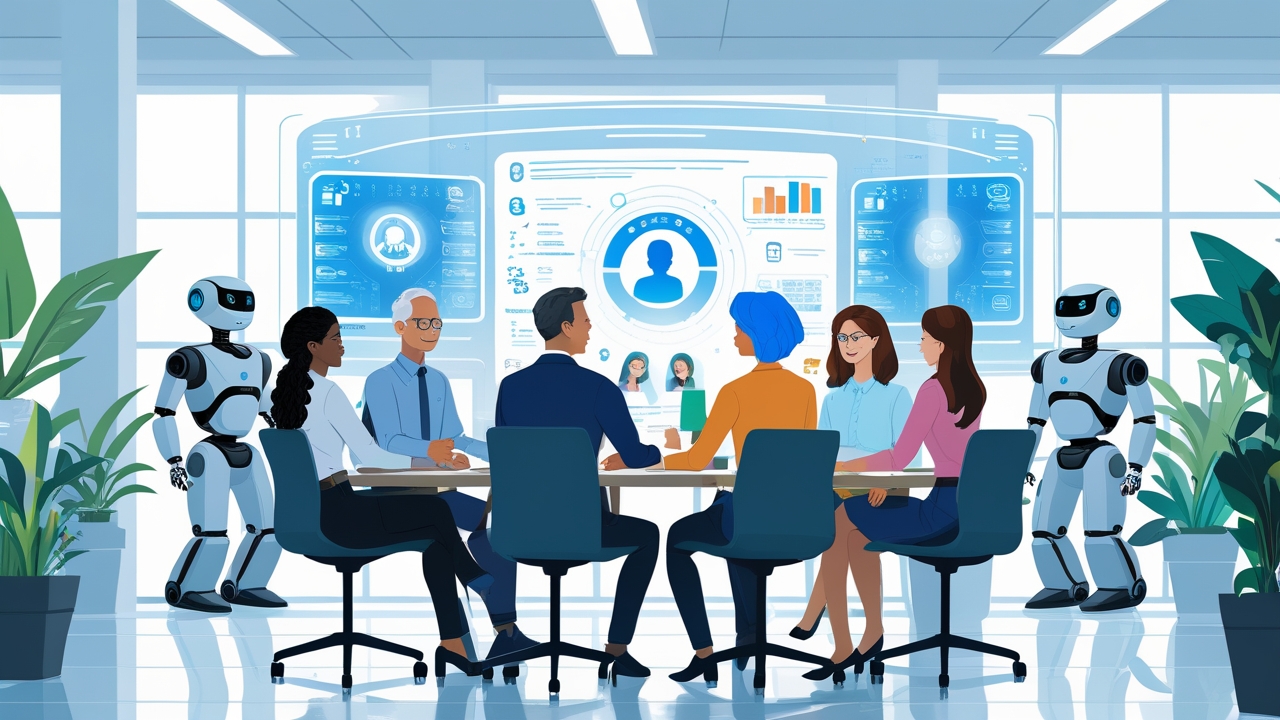
Redesigning Work for the Age of Intelligence
Discover how AI can transform the way we work and live daily, generating a profound impact on our relationships and environments.
“It’s not about finding answers, but learning to ask better questions.” – Rainer Maria Rilke
Imagine an ordinary day, a Monday morning. You sit in your office, surrounded by noise, messages, and endless meetings. In your mind, a question resonates: “Is this really what I want?” In a corner of your mind, there is a desire for change, for modernity. Suddenly, someone arrives and says: “I’ve been thinking about how artificial intelligence could help simplify this process.” Your curiosity is piqued, but at the same time, you feel that familiar doubt and the pressure of “it’s always been done this way.”
This scenario, familiar to many, would be just another passage of our routine. However, what seems like a simple everyday challenge is, in fact, the opportunity to reimagine and transform ourselves. Here, artificial intelligence is not just a tool, but a powerful ally in our work and personal evolution.
The OpenAI paper, “Industrial Policy for the Intelligence Age: Ideas to Keep People First,” invites a profound debate on how AI could redefine not only work but also our institutions and, ultimately, our society. The essence of this debate lies in a crucial question: if intelligence becomes more abundant, what remains exclusively human?
Organizations are only at the beginning of this monumental change, and the possibilities are endless. A significant transformation begins with a simple shift in paradigms. Instead of thinking about rigid departments, we can start to conceive an interconnected trilogy of workflows where human and artificial intelligence coexist, collaborate, but also redefine each other.
This is where the fundamental categories of work come in. First, human judgment, the moments when we need to evaluate contexts, ethics, and ambiguities. Next, the execution of AI, where machines can perform tasks effectively and quickly. Then, the collaboration between humans and AI, where each contributes their best in a joint effort. Lastly, supervised automation, which allows AI to operate independently but with a human eye to handle contingencies.
This framework not only helps clarify our tasks but also allows us to understand that the future of work is not about maintaining what we do but reinventing how we do it. There is no longer space for friction, for endless meetings. Instead, agility and fluidity emerge as desirable attributes. Once we embrace the workflow and take ownership of our tasks, that is where our true revolution begins.
Shifting the focus from job descriptions to ownership of workflow also transforms our management structure. It is no longer about supervising tasks but managing systems. Leaders must now decide who defines quality, where human intervention is needed, and how shared accountability is maintained.
When you shed the chains of traditional job descriptions, the organization not only becomes more efficient, but everyone’s work experience radically improves. Interactions focus more on value rather than the activity itself. Each member starts to have more opportunities to genuinely contribute, leading us to a place where each one focuses on what they do best.
Companies that implement this new paradigm not only become faster and clearer entities. Without endless deliverables and approvals, they free people from administrative burdens, allowing them to spend time applying their judgment where it’s truly needed. AI can refine repetition, synthesis, and even scale. We, as humans, give meaning to priorities and relationships, bringing the best part of ourselves to the forefront.
This is the true legacy that artificial intelligence leaves us: it is not simply another tool in our toolbox but a foundation upon which we can build a new way of working that aligns with our deepest values and aspirations. Is your organization ready to evolve? The question is no longer whether AI fits into the way we work, but whether that way of working makes sense and has validity in the future.
And this transformation begins today. Are you ready to take the first step towards the work of the future?
Artificial intelligence is transforming work and our lives. It is time to redesign the way we work, integrating AI for a more human and efficient future.
Book some metoring time with Tuyo Isaza: Book your discovery session. inteligencia artificial, rediseño del trabajo, futuro del trabajo, flujos de trabajo, colaboración humano-IA
Please visit for more articles: www.tuyoisaza.com
artificial intelligence


Comentarios